
Table of Contents
Introduction To Good Home Teeth Whitening Kits
A brighter smile does not necessarily require an expensive dental appointment. Today, Americans can choose from whitening strips, LED kits, peroxide gels, whitening pens, custom trays, and stain-removing toothpastes. The challenge is knowing which option is actually worth using.
The good home teeth whitening kits are not necessarily the ones with the biggest promises or the most impressive-looking packaging. A better choice depends on the active ingredient, treatment method, safety information, product instructions, and the type of discoloration you want to treat.
For most people, peroxide-based products are the most relevant option when the goal is to actually lighten tooth color rather than simply remove surface stains. Hydrogen peroxide and carbamide peroxide are commonly used whitening ingredients, while whitening toothpastes generally focus more on removing external stains.
This guide explains how good home teeth whitening kits works, which kit types are worth considering, what features matter, common mistakes to avoid, and when it makes more sense to see a dentist.
What Makes a Good Home Teeth Whitening Kits?
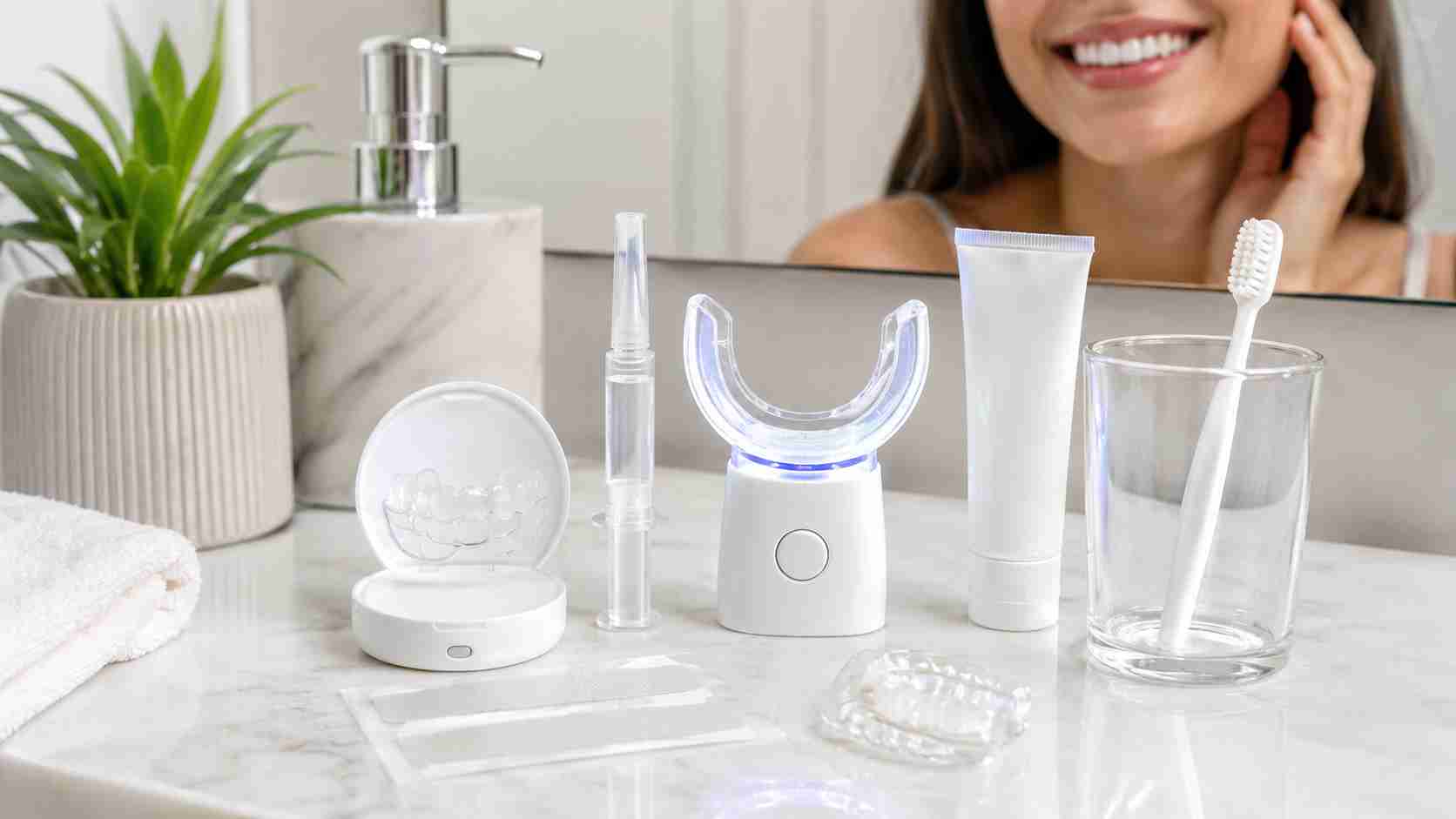
A good home teeth whitening kits should provide a reasonable balance between whitening effectiveness, ease of use, comfort, and safety.
Look beyond claims such as “professional strength” or “instant results.” Instead, check the details that tell you how the product actually works.
1. Check the active whitening ingredient
Peroxide is the key ingredient to understand.
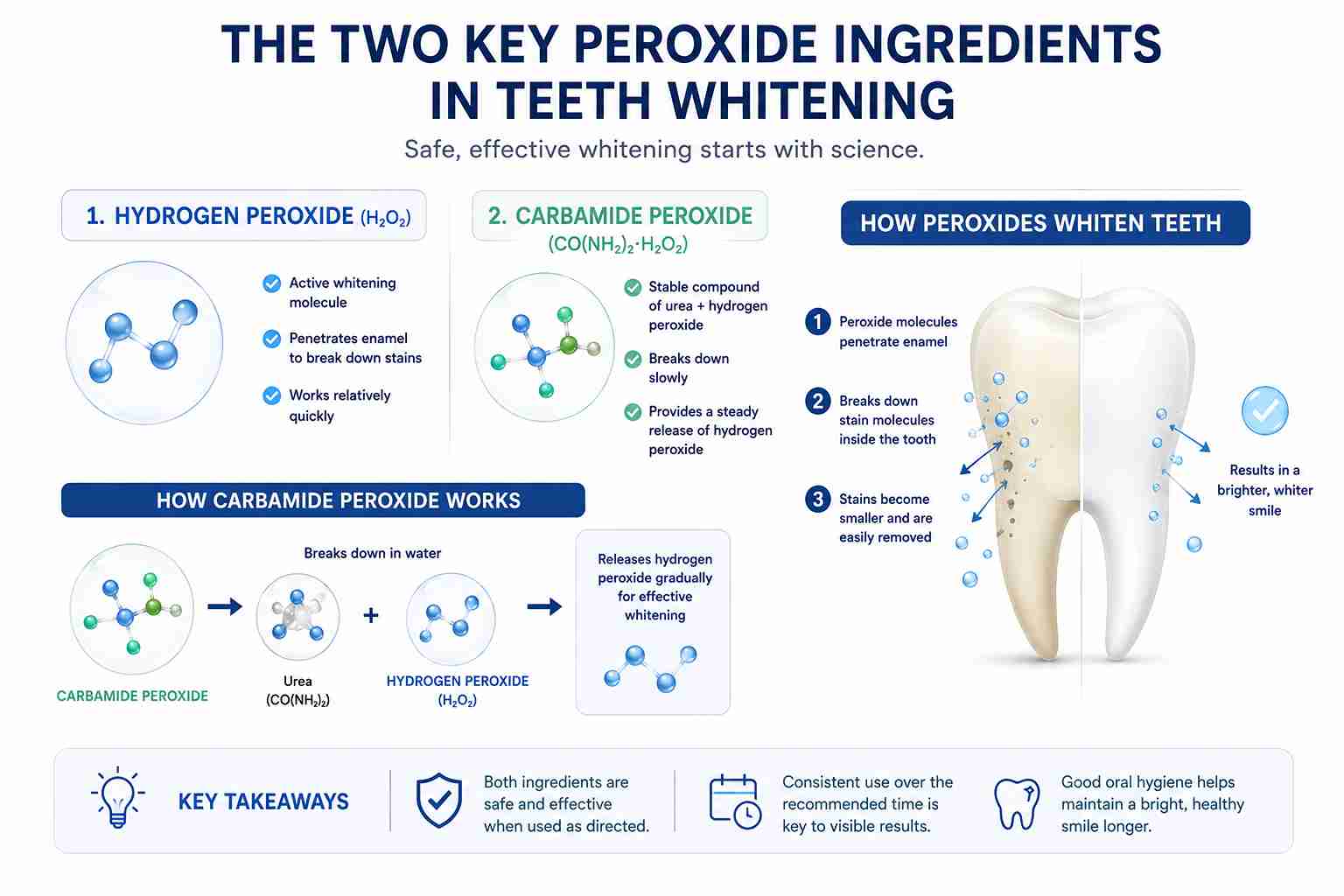
- Hydrogen peroxide acts relatively quickly and is commonly used in whitening products.
- Carbamide peroxide breaks down into hydrogen peroxide and generally works more gradually.
- Whitening toothpaste may contain stain-removing ingredients but does not necessarily provide the same bleaching effect as a peroxide-based product.
- LED lights are usually an accessory to a whitening system rather than the primary whitening ingredient.
The American Dental Association notes that effective whitening products commonly contain hydrogen peroxide or carbamide peroxide.
2. Look for credible safety information
A reputable manufacturer should clearly identify the ingredients, usage instructions, treatment duration, warnings, and contact information.
For U.S. consumers, an ADA Seal of Acceptance can be a useful additional signal when available. The ADA’s current home-use tooth-bleaching requirements include evidence relating to safety and efficacy, including clinical testing.
The absence of an ADA Seal does not automatically mean a product is unsafe, but consumers should be more careful about products with vague ingredients, exaggerated claims, or no meaningful safety instructions.
3. Consider your sensitivity level
Tooth sensitivity is one of the most common complaints associated with whitening. Gum irritation can also occur, particularly when whitening material contacts the soft tissues.
If you already have sensitive teeth, a slower or dentist-guided approach may be more appropriate than choosing the strongest-looking product.
Types of Good Home Teeth Whitening kits Products Compared
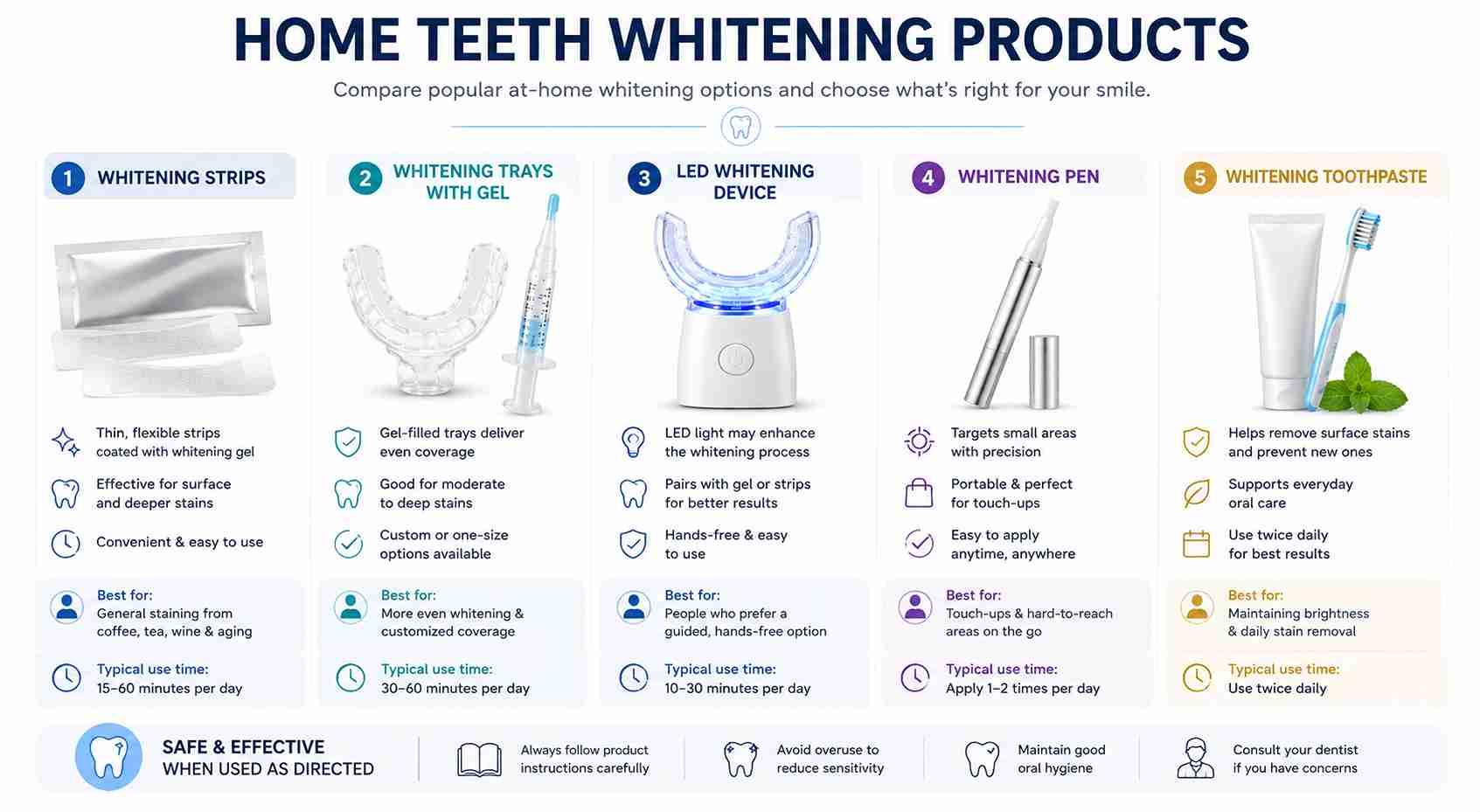
There is no single whitening system that is best for everyone. The right option depends on your budget, schedule, sensitivity, and the type of staining involved.
| Product type | Best for | Main advantage | Potential drawback |
| Whitening strips | General surface and deeper discoloration | Convenient and widely available | May cause sensitivity or uneven contact |
| Whitening trays | People wanting more controlled application | Gel can cover several teeth evenly | Fit and comfort vary |
| LED whitening kits | People who prefer a guided routine | Easy, modern application | Light is not necessarily the main whitening factor |
| Whitening pens | Occasional touch-ups | Portable and simple | Less comprehensive coverage |
| Whitening toothpaste | Mild surface stains | Easy daily maintenance | Limited bleaching compared with peroxide systems |
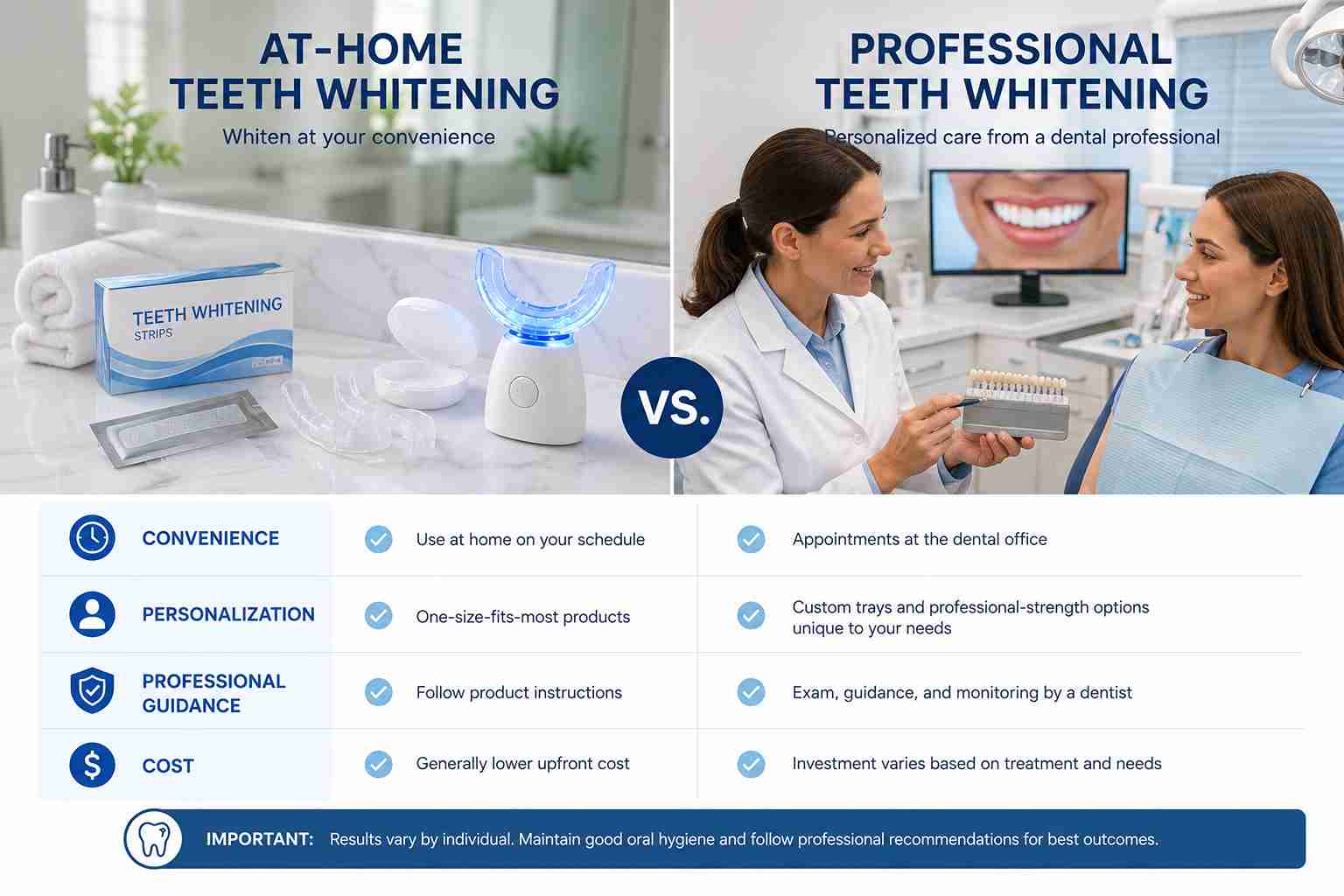
| Dentist-provided trays | People wanting personalized treatment | Custom fit and professional guidance | Higher cost |
Clinical evidence has supported the effectiveness of whitening strips, while evidence for some other over-the-counter formats varies by product and study design.
Whitening strips
Strips are often the easiest place to start because they require little preparation. The whitening material is placed directly against the teeth for a specified amount of time.
They can be particularly useful for people with common stains from coffee, tea, tobacco, or aging. However, the fit is not identical for every person, so some areas may whiten differently.
Whitening trays
Trays hold whitening gel against the teeth. Some are sold as universal products, while dentist-provided trays are made specifically for an individual’s mouth.
A properly fitted tray can help control where the gel sits and reduce unnecessary contact with the gums.
LED whitening kits
LED kits have become popular because they look more sophisticated than conventional strips or trays. However, shoppers should not assume that a blue light automatically makes a product substantially more effective.
The whitening chemistry matters. Peroxide is responsible for the core bleaching process in many systems, while the light is part of the overall treatment design.
Whitening toothpaste
Toothpaste is better viewed as a maintenance or stain-removal product than a replacement for a dedicated bleaching treatment.
It can be useful for people who primarily have external stains and want to maintain a cleaner-looking smile between whitening treatments.
How to Choose the Right Kit for Your Teeth
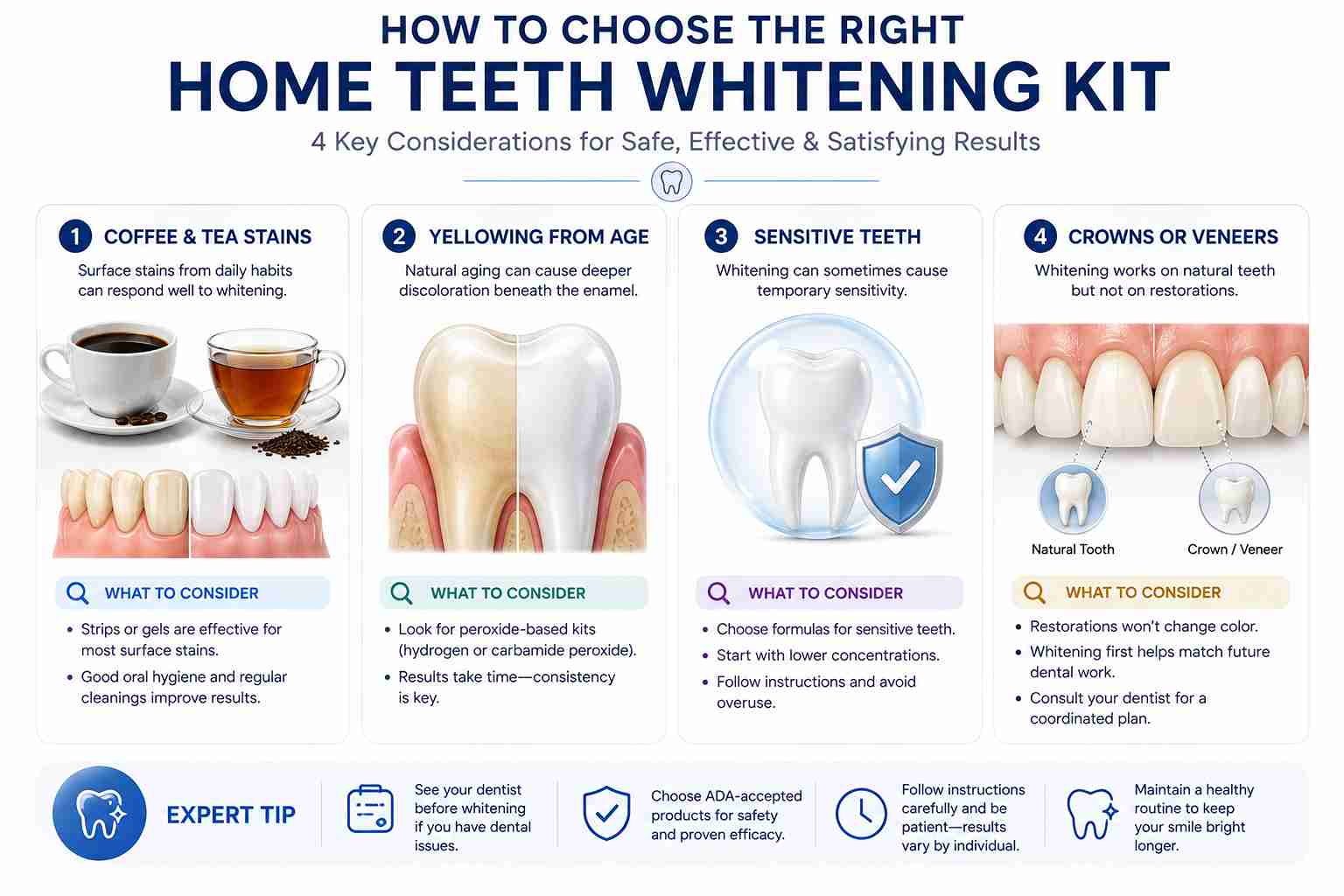
When comparing good home teeth whitening kits, start with your actual whitening goal instead of the marketing claim.
If your teeth have coffee or tea stains
Surface stains may respond well to stain-removing toothpaste or a conventional whitening product. Daily brushing and regular dental cleanings also matter because plaque and accumulated deposits can affect how your teeth look.
If your teeth have yellowing from age
Age-related discoloration can involve changes beneath the surface of the tooth, so a peroxide-based whitening system may be more appropriate than toothpaste alone.
If you have sensitive teeth
Do not assume that stronger or longer treatment is better.
A sensible approach is to follow the manufacturer’s schedule precisely and avoid adding extra sessions. If sensitivity develops, stop or reduce treatment as directed by the product instructions and speak with a dentist if symptoms persist.
If you have crowns, veneers, or fillings
This is an important consideration that is often missed.
Whitening products can change the color of natural teeth, but dental restorations may not whiten in the same way. That can make an existing crown, veneer, filling, or other restoration appear darker relative to newly whitened natural teeth.
If you have visible front-tooth restorations, discuss whitening with your dentist before starting.
How to Use a Whitening Kit Safely
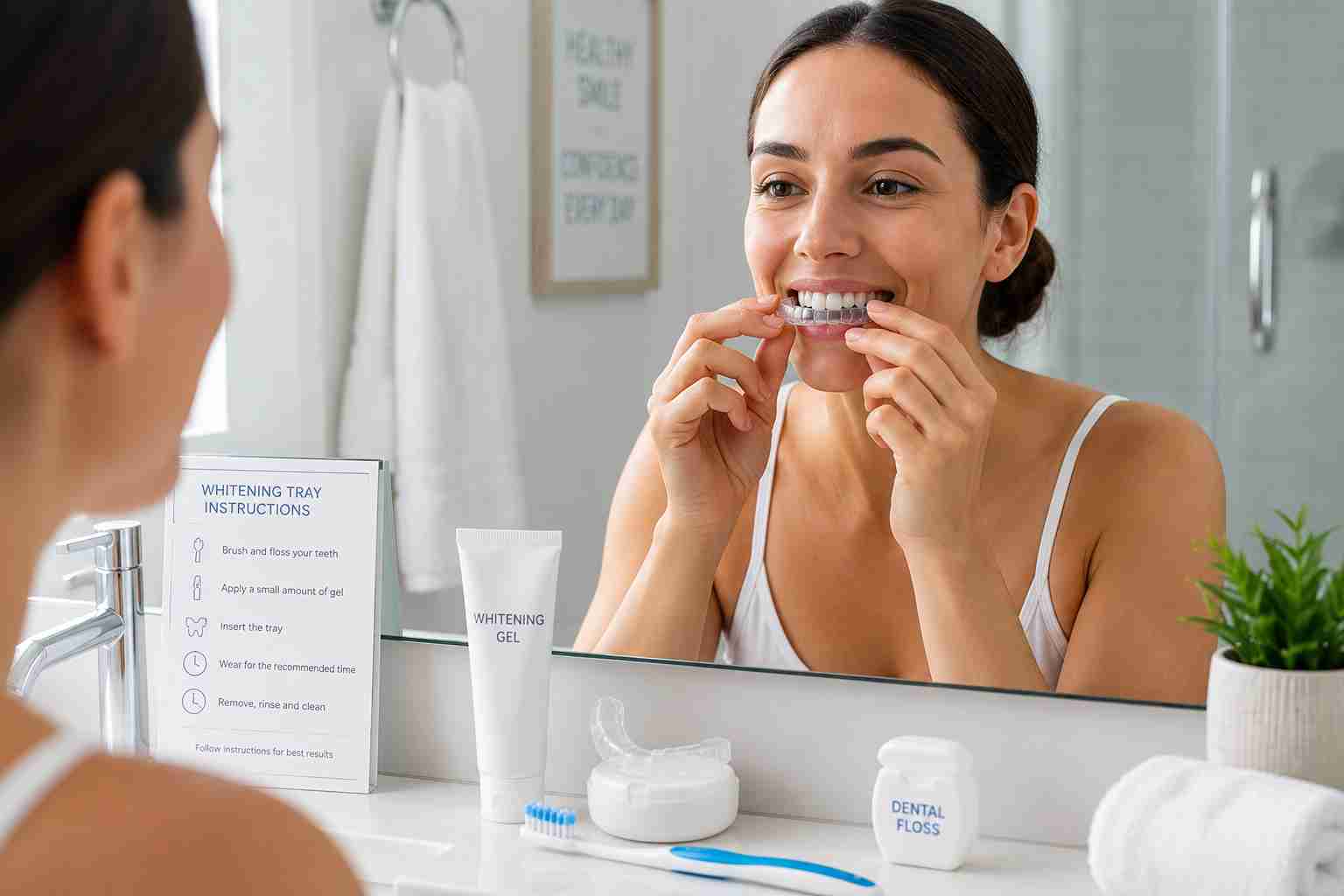
Even the good home teeth whitening kits can cause problems when used incorrectly.
Follow these practical rules:
- Read the entire label before starting.
- Use only the recommended amount of gel or whitening material.
- Do not leave a product on longer than instructed.
- Do not combine multiple whitening products without professional advice.
- Keep whitening gel away from the gums whenever the instructions require precise placement.
- Do not repeat treatments simply because you want faster results.
- Stop if you experience significant irritation or unusual pain.
Overuse is one of the biggest mistakes consumers make. Frequent or aggressive whitening can increase sensitivity and may contribute to enamel or gum problems.
Should you whiten before or after a dental cleaning?
A dental cleaning can be useful before whitening because plaque and deposits may affect the appearance of the teeth. More importantly, a dental examination can identify cavities, gum problems, recession, or other issues that could make whitening uncomfortable.
For someone who has not had a recent dental checkup, getting the mouth evaluated first is often the smarter starting point.
Common Teeth Whitening Mistakes to Avoid
Choosing among good home teeth whitening kits becomes easier when you know what not to do.
Mistake 1: Choosing based only on the LED light
A bright-looking device does not automatically mean better whitening. Look at the whitening ingredient and clinical evidence first.
Mistake 2: Assuming the highest peroxide concentration is best
More intense treatment can also mean greater sensitivity or gum irritation. The objective is effective whitening with reasonable comfort and proper use.
Mistake 3: Whitening unhealthy teeth
Whitening is a cosmetic procedure, not a treatment for cavities, infections, or gum disease.
People with cavities, active infections, or gum recession may experience more irritation or sensitivity.
Mistake 4: Using household hydrogen peroxide
A product intended for another purpose should not automatically be treated as a dental whitening product. Use products specifically formulated and labeled for oral use.
Mistake 5: Expecting restorations to whiten
Natural teeth and dental restorations do not necessarily respond the same way to bleaching. If you have visible restorations, professional advice can help you avoid an uneven result.
Mistake 6: Whitening indefinitely
Whitening is not a one-time competition to reach the whitest possible shade. Repeated unnecessary bleaching can increase the risk of sensitivity and other unwanted effects.
How Long Do Good Home Whitening kits Results Last?
The answer depends on your diet, oral hygiene, tobacco use, the original cause of discoloration, and the whitening system.
Coffee, tea, red wine, tobacco, dark berries, and strongly pigmented foods can contribute to new staining. Maintaining good brushing and flossing habits and attending routine dental visits can help preserve the appearance of your smile.
Rather than repeatedly using a whitening kit on a fixed schedule, consider maintenance based on how your teeth actually look.
For example, someone who drinks several cups of coffee each day may notice staining sooner than someone who rarely consumes strongly pigmented beverages.
Are Home Whitening Kits Safe in the USA?
For many healthy adults, appropriately used home whitening products can be well tolerated. However, “safe” does not mean risk-free.
Temporary tooth sensitivity and gum irritation are recognized side effects. Product quality, concentration, application technique, treatment frequency, and the condition of your teeth and gums all matter.
The good home teeth whitening kits should come with clear directions and appropriate warnings rather than encouraging users to improvise.
If you experience persistent sensitivity, gum irritation, pain, or another unexpected reaction, stop treatment and contact a dental professional.
Consumers should also be cautious about unregulated whitening services or products that bypass appropriate dental oversight. The ADA has warned about complications associated with unlicensed whitening services, including gum damage, sensitivity, and irritation.
A Simple Buying Checklist
Before purchasing one of the good home teeth whitening kits, ask these questions:
- Does it clearly state the active whitening ingredient?
- Does the manufacturer provide complete usage instructions?
- Is the product designed specifically for oral whitening?
- Does it have credible evidence supporting its claims?
- Is an ADA Seal of Acceptance available?
- Does the treatment fit your sensitivity level?
- Do you have crowns, veneers, fillings, or other restorations?
- Have you recently had a dental checkup?
- Does the product encourage reasonable treatment rather than excessive use?
- Is the price reasonable compared with the expected treatment period?
If several answers raise concerns, choose another product or ask your dentist for a recommendation.
Frequently Asked Questions
What is the most effective type of good home teeth whitening kits?
Peroxide-based whitening strips, gels, and trays are among the better-supported home options. Whitening toothpastes are generally more useful for removing or controlling surface stains than substantially changing intrinsic tooth color.
Are LED teeth whitening kits better than strips?
Not necessarily. LED kits can be convenient, but the whitening chemistry remains important. Look at the active ingredient, evidence, instructions, and overall product design rather than choosing a kit simply because it includes an LED device.
How often can I use a home whitening kit?
Follow the specific manufacturer’s directions rather than creating your own schedule. More frequent treatment does not necessarily produce a better result and may increase sensitivity or irritation.
Can yellow teeth become white again?
Many types of tooth discoloration can be lightened with appropriate whitening treatment, but results vary. The cause of the discoloration matters, and restorations such as crowns and veneers may not whiten like natural teeth.
Should I ask a dentist before whitening at home?
It is particularly sensible to speak with a dentist if you have sensitive teeth, cavities, gum problems, recession, significant discoloration, or visible dental restorations. A dentist can also help determine whether whitening is appropriate before you spend money on a product.
Final Verdict: Choosing the Best Home Whitening Option
The good home teeth whitening kits are the ones that match your teeth, your whitening goal, and your tolerance for treatment time and sensitivity—not simply the kit with the strongest advertising.
For many consumers, peroxide-based strips or trays are practical starting points. Whitening toothpaste can be useful for maintaining a brighter appearance and controlling surface stains, while dentist-provided trays offer a more personalized option.
Before buying, check the active ingredient, follow the directions, consider the ADA Seal when available, and avoid aggressive treatment schedules. Most importantly, do not use cosmetic whitening to ignore an underlying dental problem.
A brighter smile is achievable at home, but the best results come from appropriate treatment, realistic expectations, and good oral-health habits. If you are unsure which option fits your teeth, a dental checkup is often the most useful first step.
Read More: Teeth Whitening Home Remedies