
Table of Contents
If you are comparing oral probiotics, you have probably seen big promises about fresher breath, healthier gums, fewer cavities, and a “balanced” oral microbiome. The science is more interesting—and more limited—than many product pages suggest.
This guide explains what these products actually do, which strains and delivery formats deserve attention, what the research says in 2026, and how to shop without paying for impressive-sounding claims. You will also learn where probiotics fit into a normal U.S. dental-care routine and when a dental problem needs professional treatment instead.
What are oral probiotics?
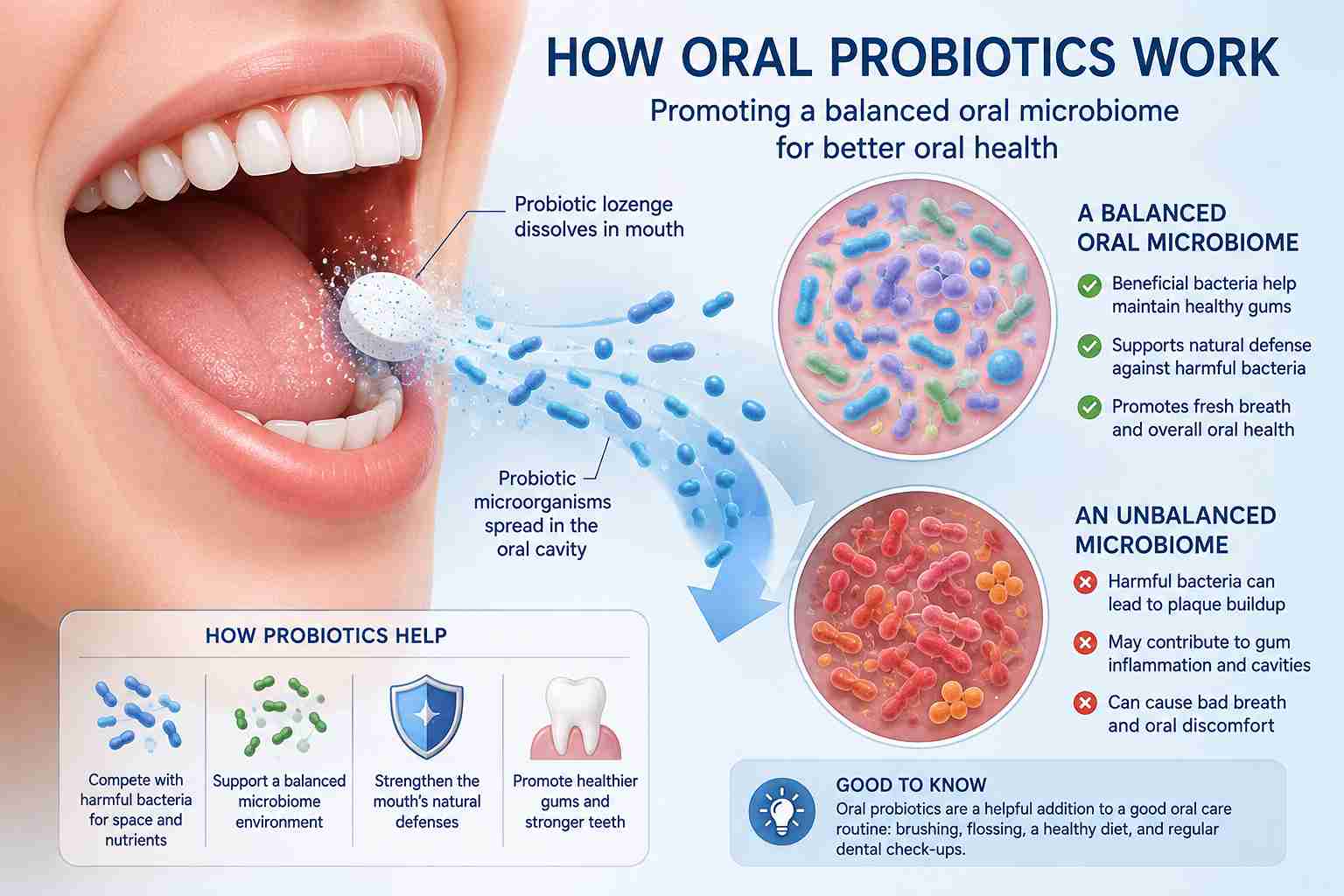
Oral probiotics are live microorganisms intended to influence the microbial community in the mouth. They are usually sold as lozenges, chewables, tablets, powders, or probiotic-containing foods and are designed to introduce selected bacteria that may compete with less desirable microbes or affect the local oral environment.
The key point is that “probiotic” is not one standardized treatment. Effects can vary by strain, dose, delivery method, duration, and the person taking it.
Some products use strains from Lactobacillus or Bifidobacterium families, while newer research is also exploring organisms naturally associated with a healthier oral ecosystem. A 2025 systematic review of clinical evidence on dental caries found promising results for several strains, including Lactobacillus paracasei, L. rhamnosus, and Bifidobacterium lactis, but also noted inconsistent findings across studies.
Oral probiotics are live microorganisms taken to support the balance of bacteria in the mouth. They may be useful as an adjunct to regular oral hygiene, but they are not a replacement for brushing, fluoride, flossing, or dental treatment.
What can oral probiotics actually help with?
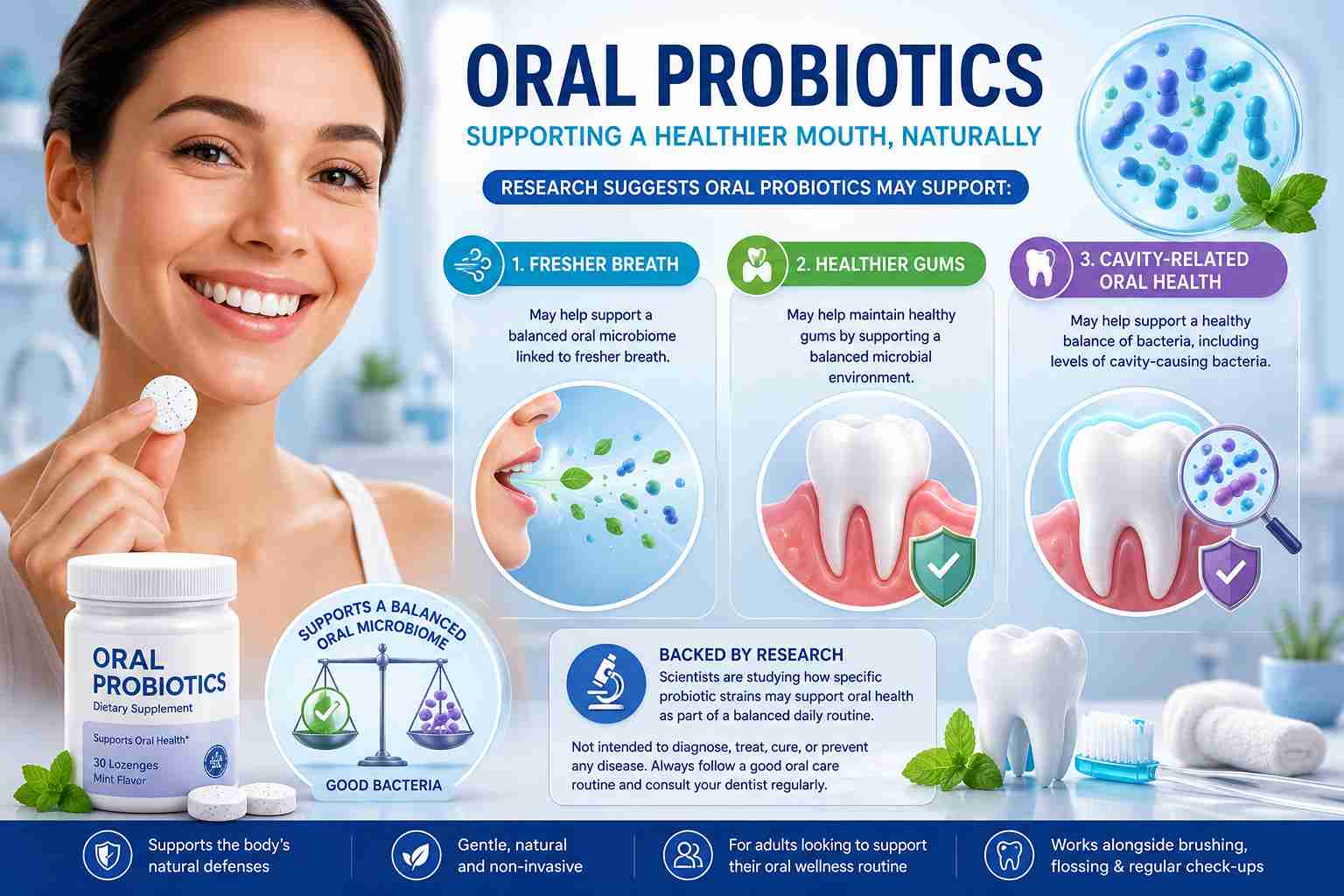
The strongest reason to consider these products is not that they “clean” your teeth. Rather, researchers are studying whether selected strains can shift the oral microbiome in a direction associated with better oral health.
1. Bad breath
Some probiotic strains may help with halitosis by influencing bacteria involved in the production of volatile sulfur compounds—the compounds responsible for much of the unpleasant odor associated with bad breath.
That does not mean every probiotic lozenge will fix chronic bad breath. Persistent halitosis can be related to gum disease, tongue coating, dry mouth, dental decay, sinus problems, reflux, or other conditions. If odor continues despite good hygiene, the cause matters more than the supplement.
2. Gum health
Research is also examining probiotics as an addition to periodontal care. A 2025 systematic review and meta-analysis found that probiotics used alongside periodontal treatment were associated with improvements in some measures, including plaque index and bleeding on probing. However, the authors emphasized the need for standardized protocols and longer follow-up.
That is an important distinction: a probiotic may be an adjunct, not a substitute for removing dental plaque and calculus or treating periodontal disease.
3. Cavities and the oral microbiome
Cavity prevention is another active area of research. The 2025 systematic review mentioned above found that many trials reported lower levels of Streptococcus mutans after probiotic use, but results varied according to strain, dosage, delivery method, and population.
Lower levels of one bacterial species do not automatically mean fewer cavities. Tooth decay is influenced by diet, fluoride exposure, saliva, oral hygiene, bacterial ecology, and the frequency of acid attacks. Think of probiotics as one possible supporting tool rather than a cavity shield.
How to choose oral probiotics that are worth considering
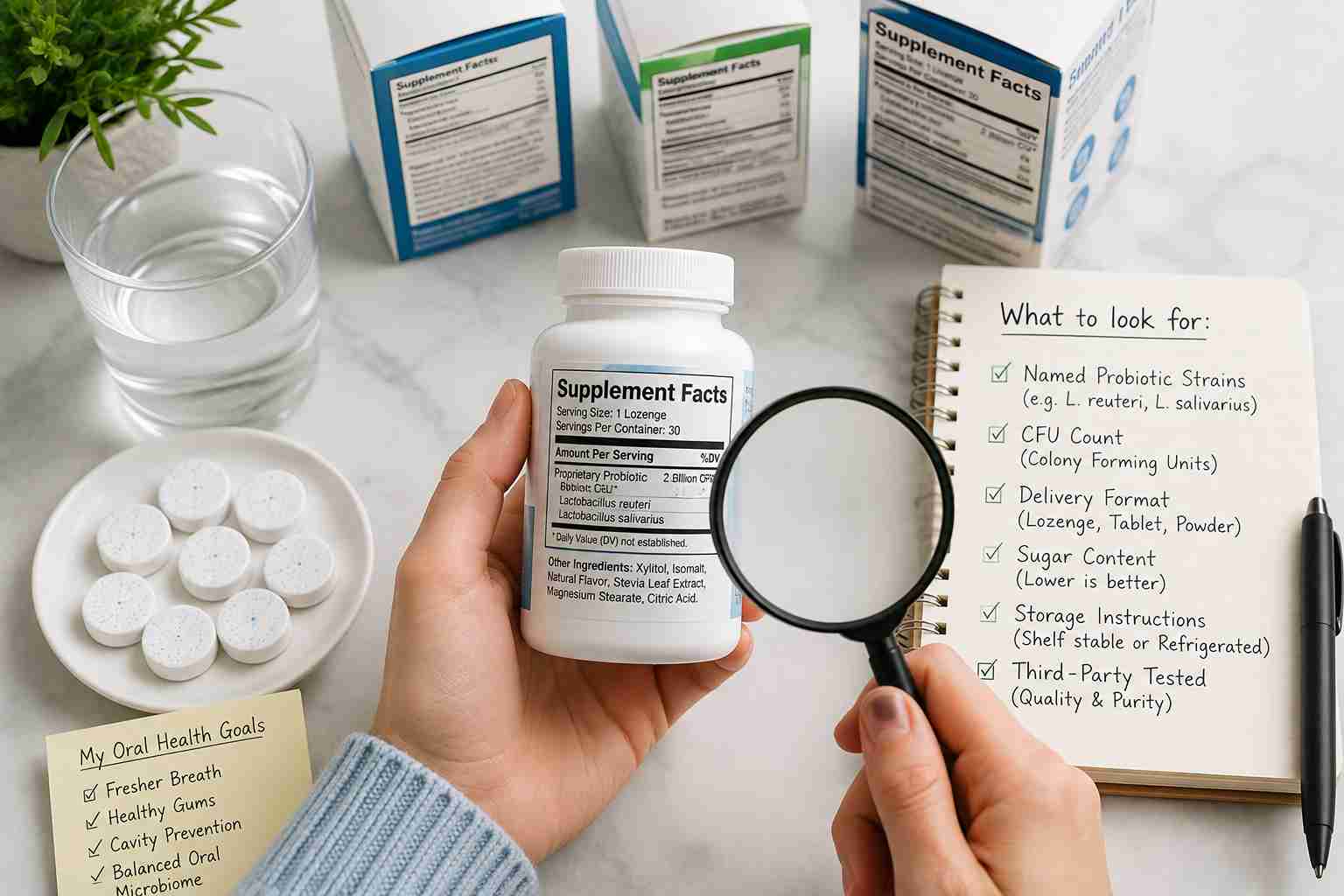
If you are shopping for a probiotic supplement, start with the label rather than the marketing headline.
Look for a named strain
“Contains probiotics” is not enough information. A useful label identifies the organism more precisely, ideally down to the strain designation. Different strains of the same species can behave differently, so a product that simply lists “Lactobacillus” gives you less information than one with a clearly identified strain.
Check the CFU information
CFU means colony-forming units, a way of describing the number of viable microorganisms. More is not automatically better. There is no universal “best” CFU number for every oral-health goal, and studies use different formulations and doses.
Instead of chasing the largest number on the bottle, look for a product that tells you:
- Which strains are included
- The amount per serving
- Recommended serving frequency
- Storage instructions
- Expiration or best-by information
- Manufacturer contact information
Choose a delivery format that makes sense
For an oral-health product, the time it spends in the mouth may matter. A lozenge that dissolves slowly has a different delivery pattern from a capsule that is swallowed quickly.
That does not prove a lozenge is superior, but it is a sensible feature to consider when the intended target is the oral microbiome.
Avoid products loaded with added sugar. If you are taking a dissolving product regularly, an unnecessary sugar source can work against your dental goals.
Consider independent quality testing
Supplements in the United States are not FDA-approved before they reach the market in the way prescription drugs are. The FDA explains that dietary supplements are regulated as a category of food, and manufacturers are responsible for ensuring products are safe and claims are truthful and substantiated.
That makes transparent labeling and reputable manufacturing especially important. Third-party testing can provide another layer of confidence about identity, purity, or manufacturing quality, although it does not prove that a product will deliver a particular dental benefit.
Oral probiotic strains: what should you know?
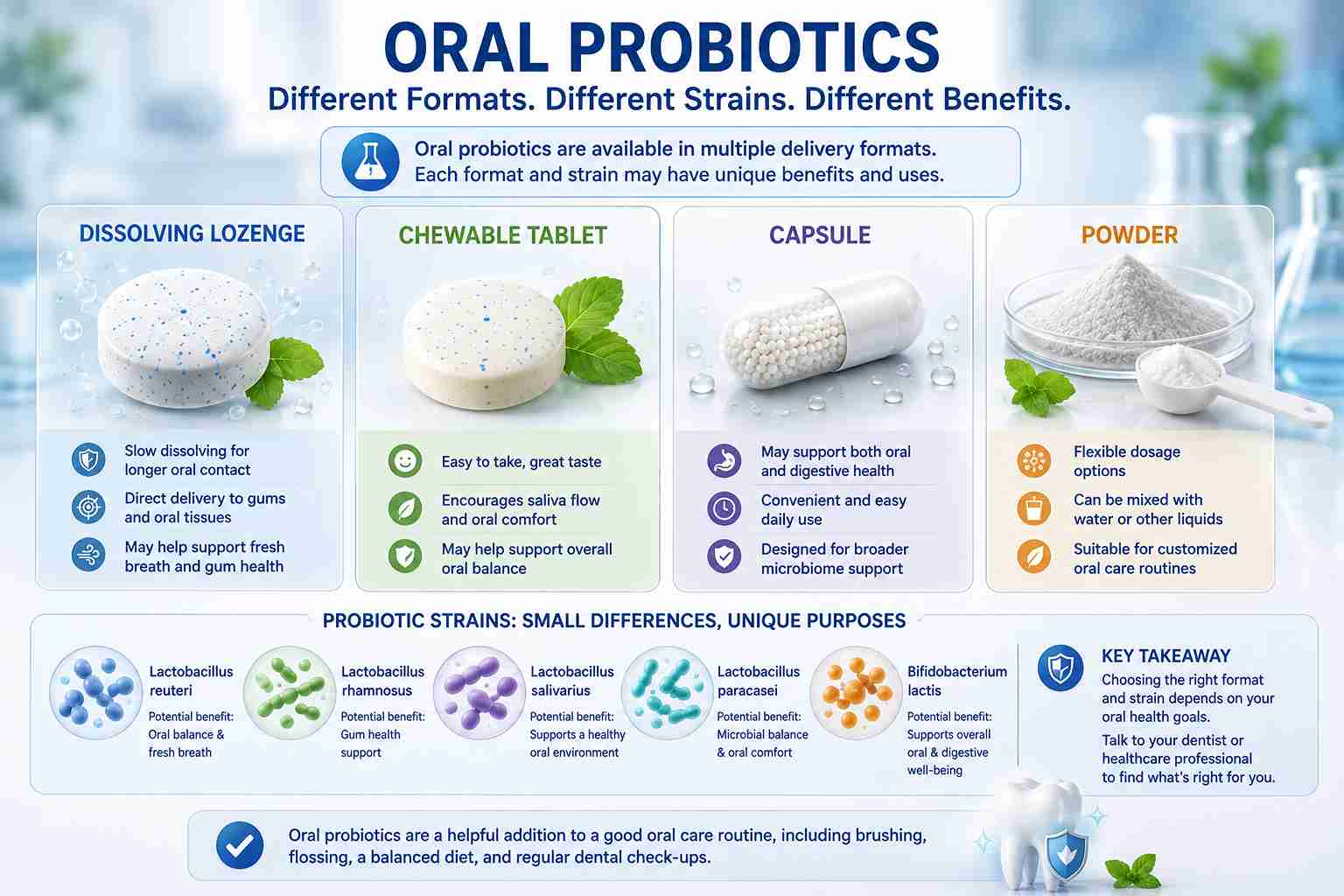
There is no single “best” oral probiotic strain for everyone.
Researchers have studied different organisms for different outcomes. For example, the recent caries review identified L. paracasei, L. rhamnosus, and B. lactis among strains that showed promising findings in some studies. Other research is examining oral-native organisms, including Streptococcus dentisani, because of their potential effects on oral pH and microbial balance.
The practical lesson is simple: match the strain to the goal, and look for human clinical evidence for the specific formulation whenever possible.
A product marketed for digestive health is not automatically appropriate for the mouth. Likewise, a high-dose probiotic with dozens of strains is not necessarily better than a targeted product supported by oral-health research.
| What to check | Why it matters |
| Named strain | Different strains can have different effects |
| CFU per serving | Helps you compare formulations |
| Delivery format | May influence contact with oral tissues |
| Sugar content | Important for routine dental use |
| Storage requirements | Live organisms can be sensitive to conditions |
| Evidence for the stated benefit | Helps separate research from marketing |
| Quality/testing information | Adds confidence in product consistency |
How to use oral probiotics safely

For most healthy adults, a probiotic product may be reasonable to discuss with a dentist or healthcare professional, particularly when you have a specific goal such as recurrent bad breath or gum concerns.
Follow the manufacturer’s directions rather than assuming that taking more will work faster.
A practical routine might look like this:
- Brush twice daily with fluoride toothpaste.
- Clean between teeth with floss or another appropriate interdental cleaner.
- Clean the tongue gently if tongue coating contributes to odor.
- Use the probiotic exactly as directed on the label.
- Avoid immediately washing it away if the product instructions recommend allowing it to dissolve in the mouth.
- Keep regular dental examinations and professional cleanings.
The probiotic should fit around your established oral-care routine, not replace it.
People who are seriously ill, immunocompromised, have significant underlying medical conditions, or are considering probiotics for a child should ask a healthcare professional before use. Supplements can have risks and interactions, and the FDA specifically recommends discussing supplement use with a healthcare professional when appropriate.
Common mistakes when buying oral probiotics
Mistake 1: Assuming “FDA approved” means a supplement is guaranteed effective
Be cautious when a product page suggests FDA approval as proof of a supplement’s effectiveness. The FDA does not generally pre-approve dietary supplements or their structure/function claims before sale.
Mistake 2: Choosing the biggest CFU number
A huge CFU count looks impressive, but the number alone does not tell you whether the strains are useful for your specific goal.
Mistake 3: Ignoring sugar
A daily oral-health lozenge with added sugar deserves scrutiny. Check the Supplement Facts panel and ingredient list.
Mistake 4: Treating a probiotic as gum-disease treatment
Bleeding gums, loose teeth, persistent swelling, pus, significant pain, or ongoing bad breath should not be managed with a supplement alone. Periodontal disease requires appropriate dental evaluation and treatment.
Mistake 5: Expecting overnight results
The oral microbiome is complex. Clinical studies vary in length and design, and benefits—when they occur—may depend on continued use and the specific strain.
Are probiotic supplements better than mouthwash?
Not necessarily. They serve different purposes.
Mouthwash can provide targeted effects depending on its active ingredients, while probiotics are intended to influence the microbial ecosystem. A probiotic is therefore not simply a “natural mouthwash.”
For everyday cavity prevention, fluoride remains central. If you have a specific dental condition, your dentist can recommend whether an antimicrobial rinse, prescription treatment, fluoride product, probiotic, or another approach makes sense.
What should U.S. shoppers look for?
For consumers in the United States, the most useful buying strategy is to treat supplements as supplements—not as FDA-approved medicines.
Look for a complete label, clear strain information, reasonable storage instructions, and claims that do not promise to cure periodontal disease or prevent every cavity. Under FDA rules, dietary-supplement structure/function claims must meet specific requirements and are not the same thing as FDA approval of a product’s effectiveness.
If you buy online, compare the actual Supplement Facts panel rather than relying on a marketplace title or a large “billions of CFU” badge. Keep the product’s storage requirements in mind, especially during hot weather or shipping.
Most importantly, buy for a defined purpose. If your main problem is bleeding gums, start with a dental examination. If your issue is occasional morning breath, improving tongue cleaning, hydration, and routine oral hygiene may be more important than adding a supplement.
Frequently Asked Questions
Do oral probiotics really work?
They may help with some oral-health outcomes, but the evidence is strain-specific and not yet strong enough to treat all dental problems. Recent reviews show promising findings for gum health and cavity-related measures, while also pointing to inconsistent results and a need for better standardized research.
What is the best probiotic for your mouth?
There is no universally proven best product. Choose a formulation that identifies its strains, provides useful dosing information, and has human clinical evidence relevant to the outcome you care about.
Can probiotics replace brushing and flossing?
No. They should be considered an optional adjunct to established oral hygiene, not a replacement for fluoride toothpaste, tooth cleaning, interdental cleaning, or professional dental care.
How long does it take for oral probiotics to work?
There is no single timeline. Studies differ in strain, dose, duration, and outcome, so a product should not be judged solely by a promise of rapid results. If symptoms persist, investigate the underlying cause rather than continually changing supplements.
Are probiotics safe for everyone?
Not necessarily. Most healthy people tolerate probiotics, but supplements can pose risks in certain circumstances. People with serious illnesses, weakened immune systems, or complex medical situations should seek individualized medical advice before using them.
Final takeaway
The smartest way to evaluate oral probiotics is to focus on evidence, strain specificity, product transparency, and your actual dental goal. Research published through 2025 suggests that selected probiotic strains may support aspects of oral health, particularly as an adjunct to periodontal care, but the field is still developing.
If you decide to try one, choose a clearly labeled product, avoid unnecessary sugar, follow the directions, and give your dentist the full picture of what you are using. A probiotic can be part of a thoughtful oral-care routine, but it should never delay treatment for a real dental problem.
CTA: Before buying, write down your main goal bad breath, gum support, cavity prevention, or general oral-microbiome support and compare products against that goal rather than choosing based on the biggest marketing claim.
Read More: Prodentim Reviews – Does This Oral Probiotic Really Work in 2026?