
Table of Contents
If your cat has started carrying a little extra weight, changing its food can be an important part of getting back to a healthy body condition. But choosing a weight-management formula isn’t as simple as grabbing the bag with “light” or “weight control” on the label.
The best cat food for weight loss should provide complete and balanced nutrition while helping your cat feel satisfied on fewer calories. Protein quality, calorie density, portion size, feeding habits, and your cat’s health all matter.
In this guide, you’ll learn what to look for in a weight-loss cat food, how to compare formulas, common feeding mistakes to avoid, and when a veterinarian should be involved.
What Makes the Best Cat Food for Weight Loss?
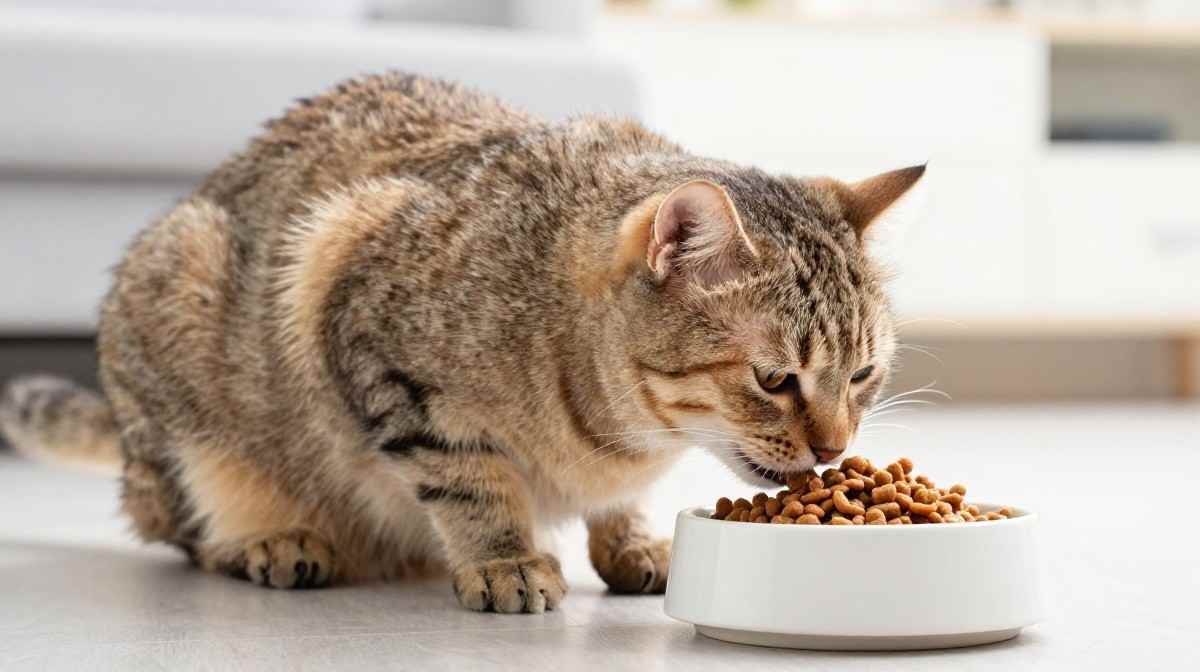
For most overweight cats, the goal isn’t simply to feed less food. Cutting portions too aggressively can leave a cat hungry and may create nutritional problems.
A good weight-management diet generally has these characteristics:
- Controlled calories: Fewer calories per serving make portion control easier.
- Adequate animal-based protein: Protein helps support lean muscle during weight loss.
- Appropriate fat levels: Fat is calorie-dense, so controlling dietary fat can help manage total calories.
- High moisture: Wet food can provide more volume for fewer calories than some dry foods.
- Complete and balanced nutrition: The diet should meet established nutritional requirements for cats.
- Good palatability: A diet won’t help if your cat refuses to eat it.
The right choice depends on your cat’s age, current weight, body condition, activity level, and health status. A veterinarian can help determine how much weight your cat actually needs to lose.
Why protein matters
Cats are obligate carnivores, meaning animal-derived nutrients play an important role in their biology. During calorie restriction, maintaining adequate protein intake can help preserve lean body mass.
However, “more protein” doesn’t automatically mean a food is better. The entire nutritional profile and calorie content matter.
How to Choose a best Cat Food for weight loss
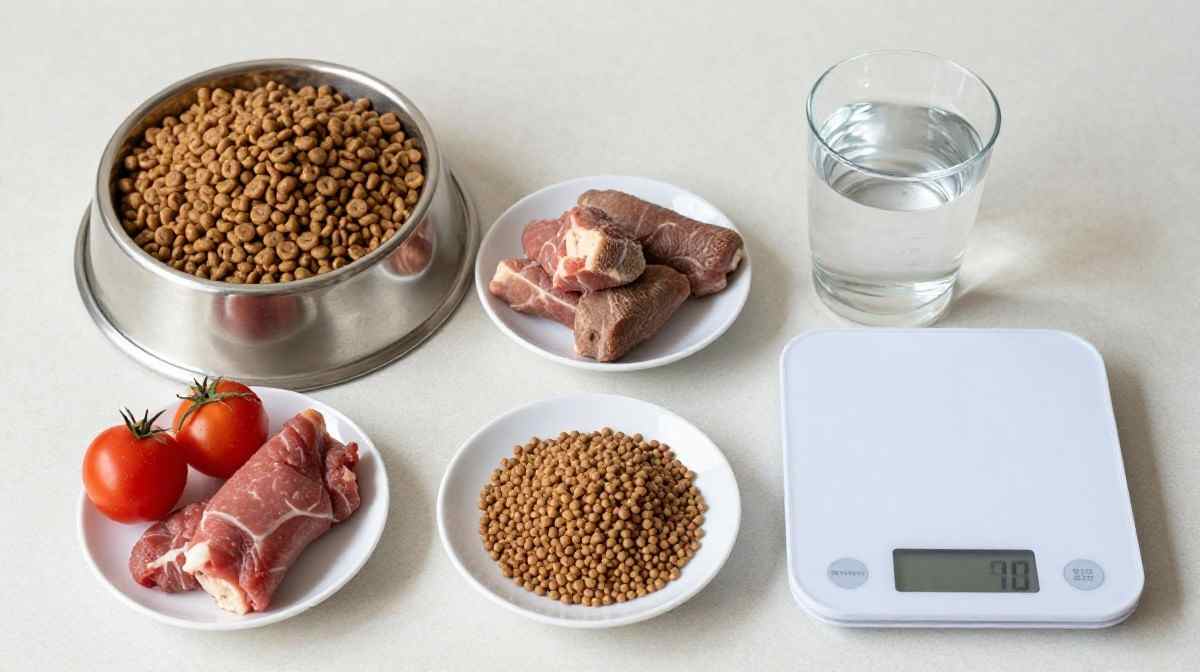
When comparing products in a U.S. pet store or online retailer, don’t rely only on front-of-package claims. Turn the package around and examine the nutritional information.
1. Check calories per cup or can
Calories are one of the most useful numbers when comparing foods.
Two foods can look similar in terms of ingredients but provide very different amounts of energy. If your cat needs a calorie-controlled diet, a lower-calorie food may allow a more satisfying portion.
For canned food, check calories per can or pouch. For dry food, look at calories per cup or kilogram.
2. Look for complete and balanced nutrition
Choose a food labeled as complete and balanced for your cat’s appropriate life stage.
In the United States, nutritional adequacy statements are commonly based on standards established by the Association of American Feed Control Officials (AAFCO).
Avoid assuming that a food labeled “natural,” “premium,” “indoor,” or “weight control” is automatically suitable for weight loss.
3. Consider wet food
Wet food can be useful for cats that need to control calories because its high water content can contribute to greater meal volume.
Some cats also find wet meals more satisfying than small portions of calorie-dense dry food.
That doesn’t mean dry food is inherently bad. A carefully measured dry diet can work well when calories and portions are controlled.
4. Don’t ignore your cat’s preferences
A nutritionally excellent food isn’t useful if your cat refuses to eat it.
When switching foods, introduce the new diet gradually unless your veterinarian tells you otherwise. A sudden change can cause digestive upset and may make a picky cat reject the new food entirely.
Best Types of Cat Food for Weight Management
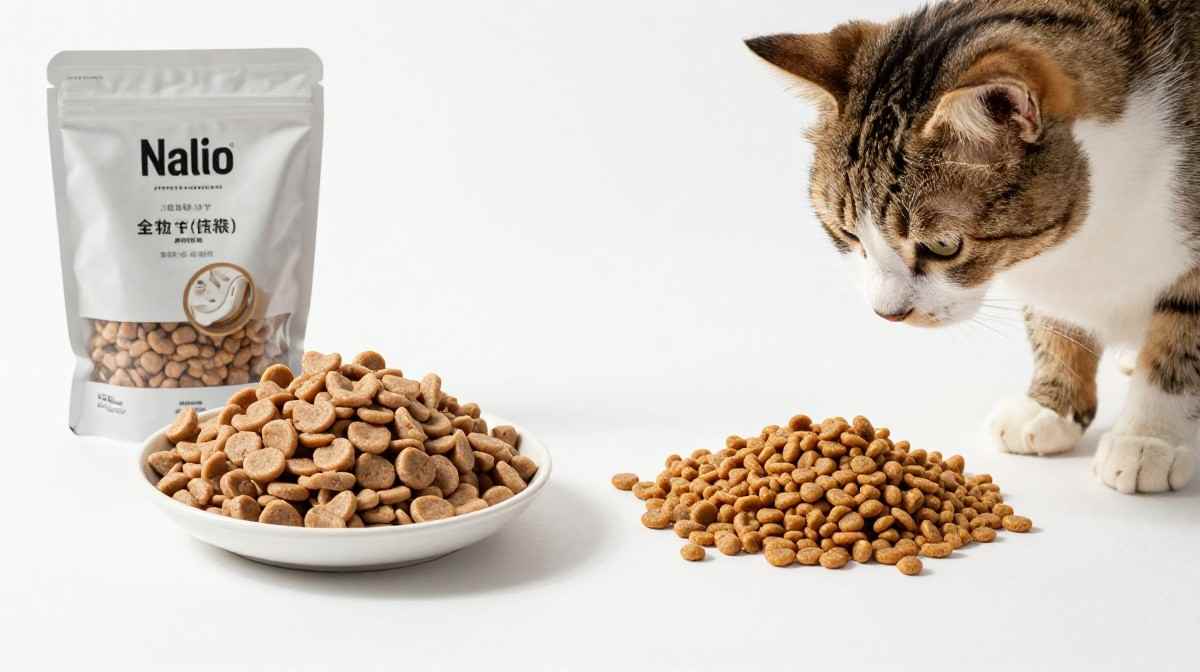
There isn’t one universally best cat food for weight loss. Different cats may do better with different approaches.
| Food type | Potential advantage | What to watch |
| Veterinary weight-management diet | Specifically formulated for calorie restriction | Usually best selected with veterinary guidance |
| High-protein wet food | Can provide protein and substantial meal volume | Calories still need to be measured |
| Calorie-controlled dry food | Convenient and easy to store | Portions can be surprisingly calorie-dense |
| Mixed wet and dry feeding | Flexible and appealing to many cats | Total daily calories must be calculated |
| Regular complete-and-balanced food in controlled portions | Can work for some cats | Requires careful calorie and portion management |
Veterinary therapeutic diets
For cats that are significantly overweight, veterinary weight-management foods can be particularly useful. These formulas are designed around controlled calorie intake while providing appropriate nutrients.
Your veterinarian may recommend a therapeutic diet when your cat needs a structured weight-loss plan or has another medical condition that affects nutrition.
Over-the-counter weight-control foods
Some commercially available foods are marketed for indoor cats or weight management. They may be appropriate for mildly overweight cats, but the label alone shouldn’t determine your choice.
Compare calories, nutritional adequacy, feeding recommendations, and your cat’s individual needs.
How Much Should an Overweight Cat Eat?
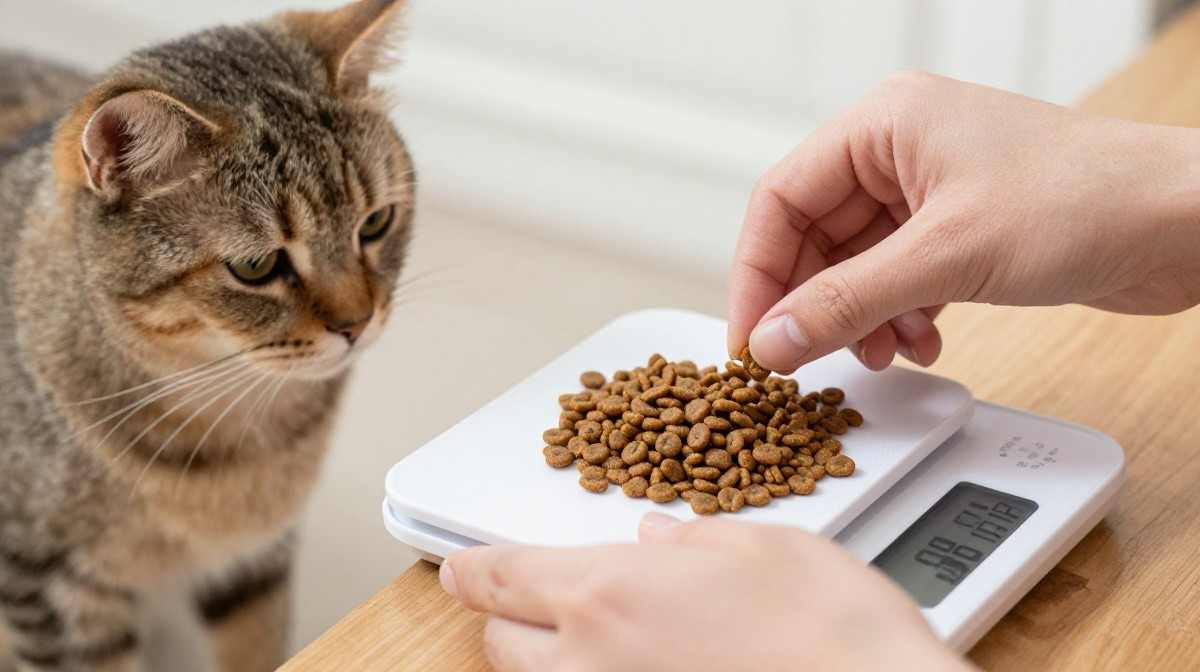
This is where many otherwise good weight-loss plans fail.
The feeding amount printed on a package is a starting point, not necessarily the exact amount your cat needs. Individual calorie requirements vary considerably.
A veterinarian can estimate your cat’s calorie needs based on factors such as:
- Current body weight
- Ideal body weight
- Body condition score
- Age
- Activity level
- Neutering status
- Existing medical conditions
- Rate of weight loss
Measure every meal
“About a handful” isn’t a reliable measurement.
Use a measuring cup for dry food, or better yet, a kitchen scale when practical. Small differences repeated every day can add up.
Also count calories from:
- Treats
- Table scraps
- Dental treats
- Supplements containing calories
- Food used to administer medication
A useful rule is to keep treats as a small part of the overall daily calorie allowance rather than treating them as “free” calories.
How Fast Should a Cat Lose Weight?
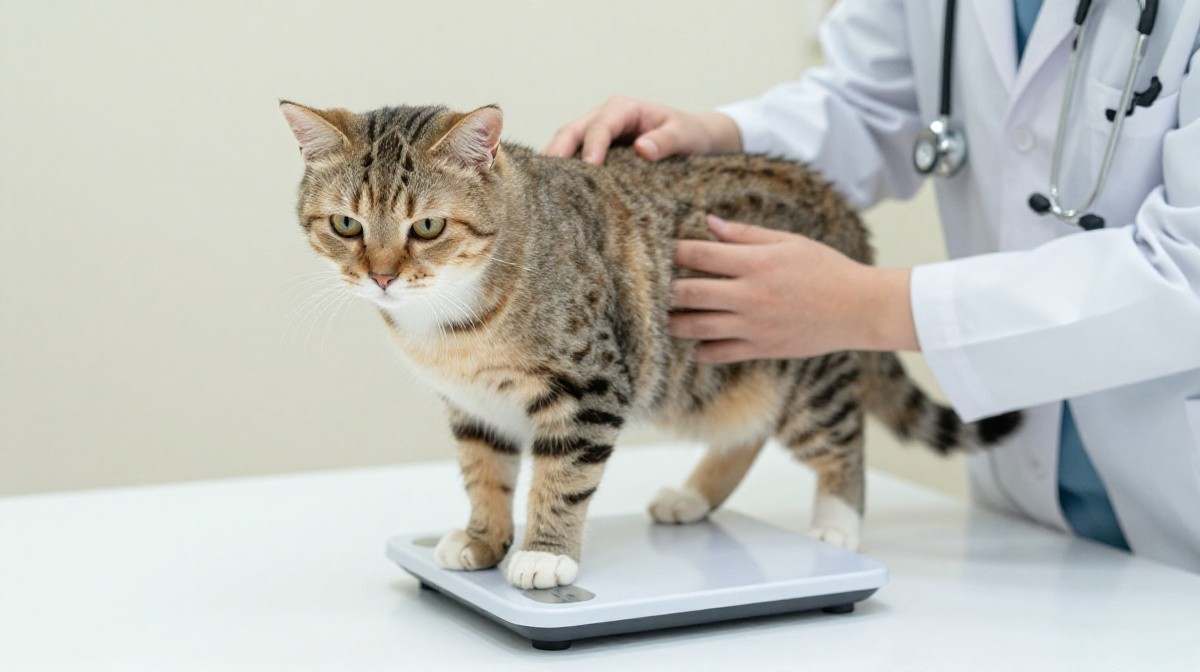
Cats should generally lose weight gradually rather than through aggressive calorie restriction.
Rapid weight loss or inadequate food intake can put cats at risk of serious health problems, including hepatic lipidosis (fatty liver disease).
A commonly used veterinary target is approximately 0.5% to 2% of body weight per week, but the appropriate rate depends on the individual cat.
For example, a 15-pound cat shouldn’t be expected to lose several pounds in a few weeks. A controlled, monitored plan is safer.
Weigh your cat regularly
Regular weigh-ins help you determine whether the plan is working.
Depending on your veterinarian’s recommendation, you might monitor weight every one to four weeks. Keep a simple record:
| Date | Weight | Food amount | Notes |
| Week 1 | 15.0 lb | Measured daily portion | Starting point |
| Week 3 | 14.8 lb | Same portion | Gradual progress |
| Week 5 | 14.5 lb | Adjusted if advised | Continue monitoring |
If your cat stops eating, loses weight very rapidly, becomes unusually lethargic, vomits repeatedly, or develops other concerning symptoms, contact your veterinarian promptly.
Common Cat Weight-Loss Mistakes to Avoid
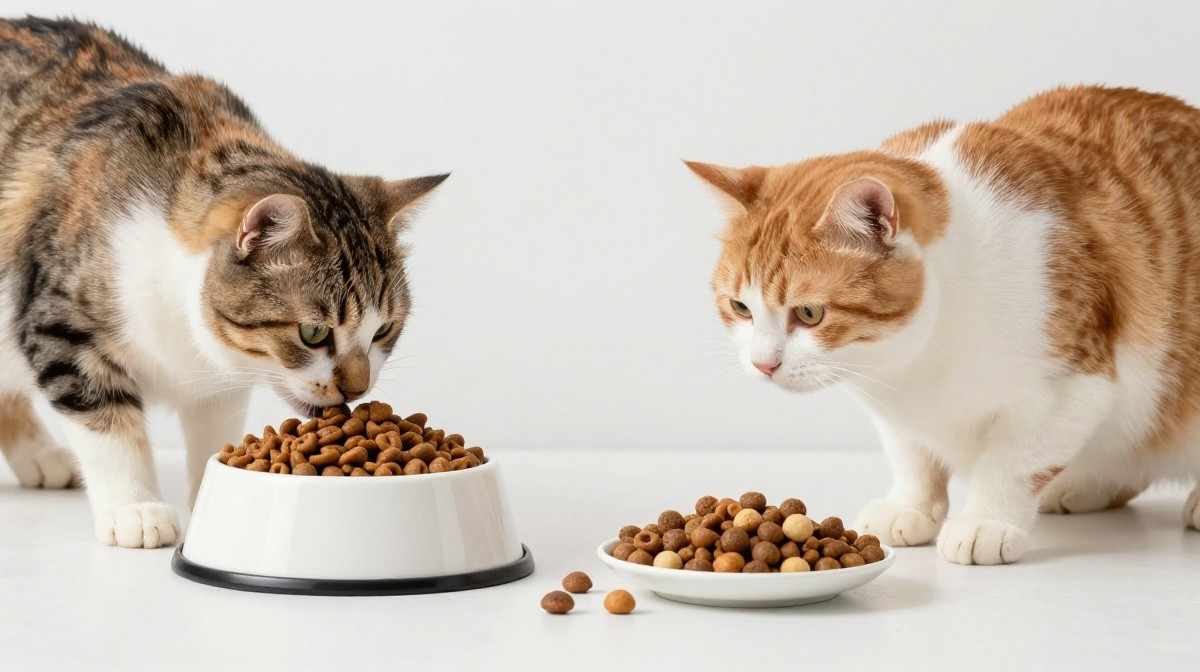
Even with the best cat food for weight loss, feeding habits can undermine progress.
Free-feeding all day
Leaving a bowl constantly full makes it difficult to know how many calories your cat consumes.
Some cats can regulate their intake reasonably well. Others will continue eating whenever food is available.
Measured meals are usually easier for weight management.
Cutting food dramatically
It’s tempting to halve your cat’s food when you notice weight gain. Don’t make a drastic change without professional guidance.
Cats need adequate nutrients every day, and sudden food restriction can be dangerous.
Giving too many treats
A few treats may seem insignificant, but several every day can contribute meaningful calories.
Try replacing some commercial treats with a small portion of your cat’s regular food, if appropriate.
Choosing food based only on ingredients
Ingredient lists are useful, but they don’t tell the entire story.
A food can contain appealing ingredients and still be too calorie-dense for your particular weight-loss plan. Look at the complete nutritional profile and calorie information.
Assuming exercise can compensate for overeating
Play is excellent for physical activity and mental stimulation, but it shouldn’t be viewed as permission to feed unlimited calories.
Short interactive play sessions throughout the day can complement a controlled feeding plan.
How to Help Your Cat Lose Weight Without Constant Hunger
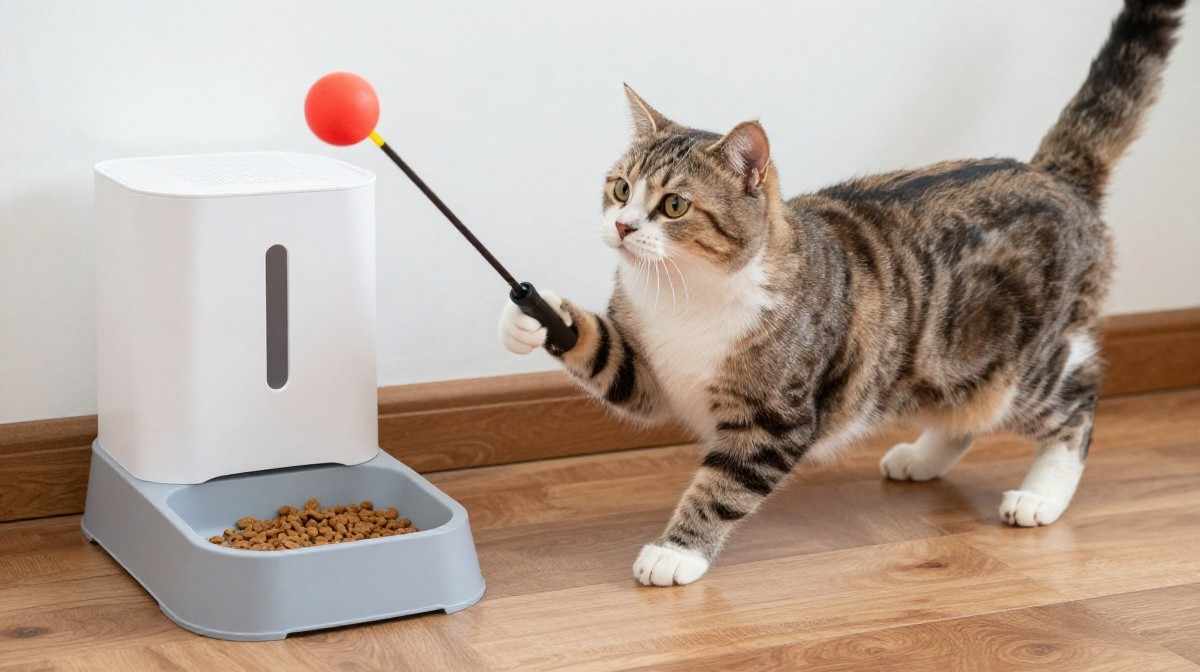
Food isn’t the only tool available.
Try these practical strategies:
Feed multiple smaller meals.
Splitting the daily allowance into several meals can make the day feel more manageable for some cats.
Use puzzle feeders.
Food puzzles can slow eating and add mental stimulation.
Increase play.
Use wand toys, balls, or other appropriate toys for short, regular sessions.
Make food harder to gulp down.
Slow-feeding options can help cats that eat extremely quickly.
Keep everyone in the household consistent.
One family member secretly giving extra treats can undo an otherwise carefully planned diet.
Monitor body condition, not just the scale.
Weight is useful, but your veterinarian can also assess muscle mass and body condition.
When Should You Ask a Veterinarian?
If your cat is substantially overweight, has gained weight unexpectedly, or has other symptoms, professional guidance is important.
Weight gain isn’t always caused by overeating. Medical conditions, medications, reduced activity, aging, and other factors can influence body weight.
A veterinarian can:
- Determine your cat’s body condition score.
- Estimate an appropriate target weight.
- Calculate a safe calorie intake.
- Recommend an appropriate diet.
- Establish a realistic rate of weight loss.
- Monitor progress and make adjustments.
This is especially important for cats that are obese, elderly, very young, pregnant, nursing, or dealing with another medical condition.

Frequently Asked Questions
What is the best cat food for weight loss?
The best cat food for weight loss is a complete and balanced diet that provides appropriate calories and adequate protein while helping your cat maintain lean body mass. For overweight cats, a veterinarian-recommended weight-management formula may be the safest starting point.
Is wet food better than dry food for overweight cats?
Not necessarily, but wet food can make calorie control easier for some cats because its high water content can provide greater meal volume. The total daily calorie intake remains the key factor.
How much should I feed my overweight cat?
There isn’t one correct amount for every cat. Feeding should be based on factors such as ideal body weight, current weight, activity, age, and health. Ask your veterinarian for an individualized calorie target.
Can cats lose weight by eating less regular cat food?
Sometimes, but simply reducing a regular diet too much can create nutritional problems or excessive hunger. A calorie-controlled weight-management diet may provide a better nutritional balance during weight loss.
What should I do if my cat refuses its new diet?
Don’t allow a cat to go without food simply because it dislikes a new formula. Transition gradually and speak with your veterinarian if your cat continues refusing food. Cats that stop eating can develop serious health complications.
Final Thoughts: Choosing the Right Food Is Only Part of the Plan
Finding the best cat food for weight loss is an important first step, but successful weight management involves more than choosing a different bag or can.
Focus on calorie control, adequate nutrition, measured portions, regular monitoring, appropriate activity, and gradual progress. Most importantly, avoid aggressive dieting. Cats need a carefully managed approach to lose excess weight safely.
If you’re unsure where to start, have your veterinarian determine your cat’s ideal weight and daily calorie target. Then use that information to compare suitable foods and build a feeding routine you can consistently follow.
With the right diet and a realistic plan, healthy weight management can become a sustainable part of your cat’s everyday life.
Read More: Best Bread for Weight Loss: How to Choose the Right Loaf in the USA