
Table of Contents
You don’t have to avoid hot coffees or cold water for the next few days while your teeth whiten.You don’t have to avoid hot coffee and cold water because your teeth are whitening. However, for millions of Americans, the main challenge that prevents them from getting a brighter smile is tooth sensitivity.
Fortunately, the best of the modern whitening products have come a long way. Many now contain ingredients that are targeted at eliminating sensitivity and years of staining from coffee, tea, wine, tobacco, and natural ageing.
In this guide, you’ll discover the ways that sensitive teeth affect whitening, the techniques that work best for sensitive teeth, which ingredients to seek out (and steer clear of), how dentists recommend you whiten safely, and practical tips to help make the experience as comfortable as possible despite using whitening.
If you’re thinking about whitening strips, gels, LED kits, whitening toothpaste or professional whitening, this guide will help you make your decision.
How to Find the Best Teeth Whitening for Sensitive Teeth?
Lower concentrations of peroxide with desensitizing ingredients like potassium nitrate, fluoride or nano hydroxyapatite make them some of the best teeth whitening for sensitive teeth. Sensitive tooth whitening strips, custom whitening trays made by the dentist and whitening toothpastes that gradually lighten the teeth are usually the most effective and comfortable.
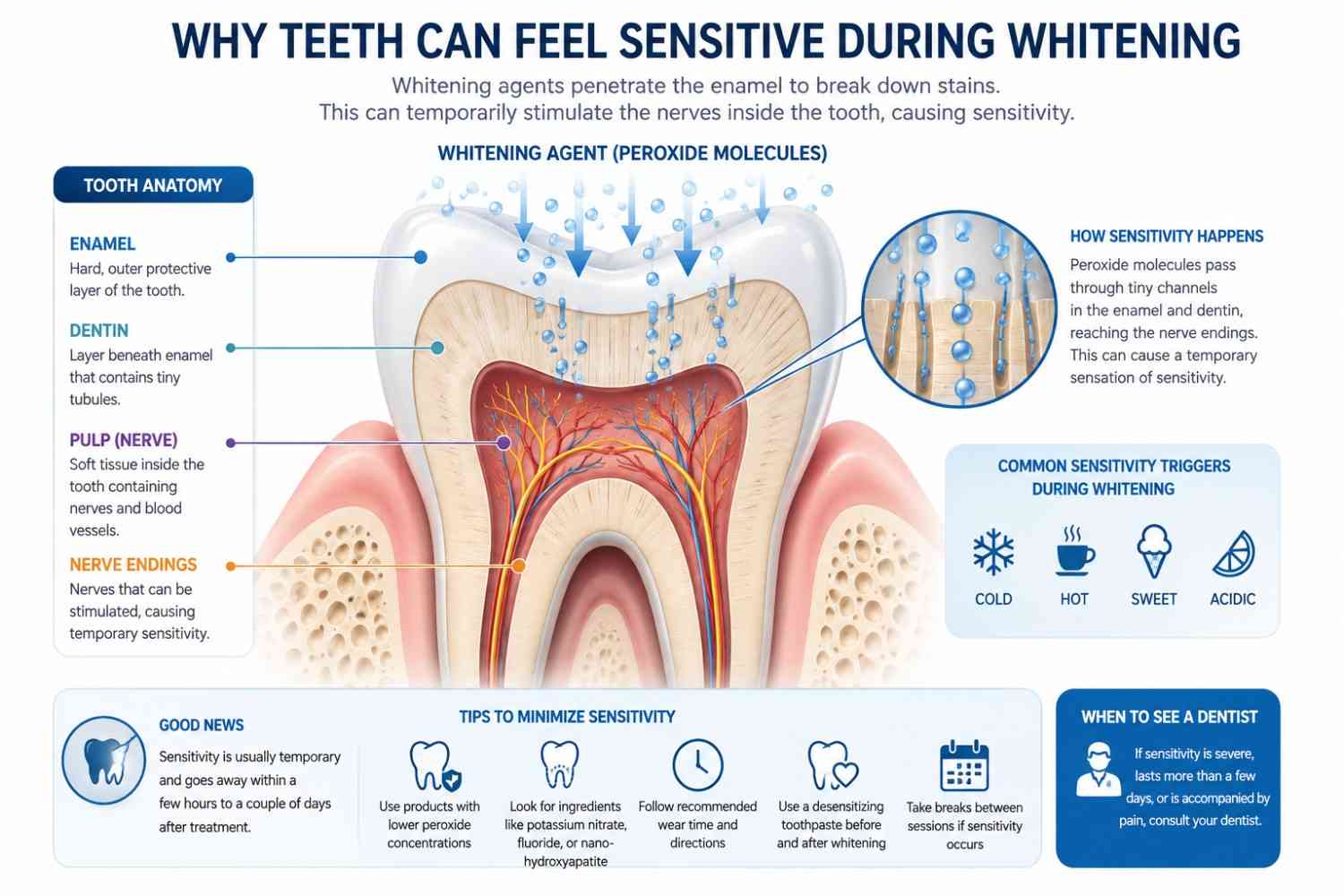
Teeth sensitivity during whitening occurs for a few reasons.The reason why teeth become sensitive during whitening is a few.
If you are more aware of the reasons some people find white to be uncomfortable, you will be better equipped to make the most safe choice.
The majority of the whitening products available make use of either:
- Hydrogen peroxide
- Carbamide peroxide
These ingredients are taken into the enamel and split the molecules of stains contained within the tooth.
In the process microscopic channels temporarily form in the enamel. This enables the whitening agent to penetrate the deeper stains, but it could temporarily stimulate nerves within the tooth as well.
Are more sensitive if they have:
- Naturally thin enamel
- Gum recession
- Cracked teeth
- Untreated cavities
- Enamel worn out due to grinding.
- Existing tooth sensitivity
Usually, sensitivity will disappear several hours or two days after treatment.
Common Causes of Tooth Discoloration
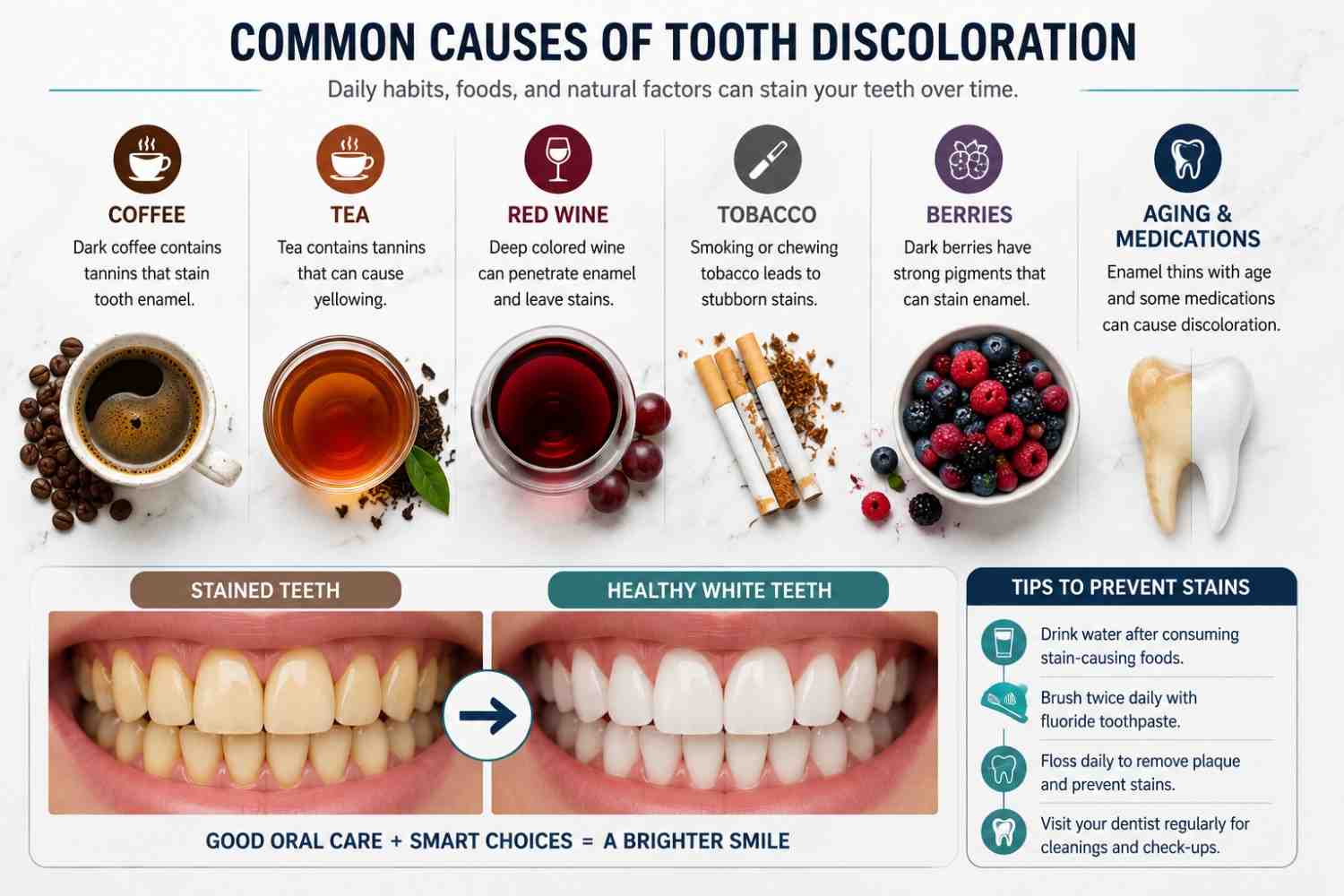
Not every stain responds equally to whitening.
| Type of Stain | Common Causes | Whitening Response |
| Surface stains | Coffee, tea, soda, wine | Excellent |
| Tobacco stains | Smoking and chewing tobacco | Good |
| Age-related stains | Natural enamel thinning | Moderate to Good |
| Medication stains | Certain antibiotics | Limited |
| Trauma-related discoloration | Tooth injury | Often requires professional treatment |
Knowing the cause of discoloration helps set realistic expectations.
What are the benefits of best teeth whitening for sensitive teeth product?
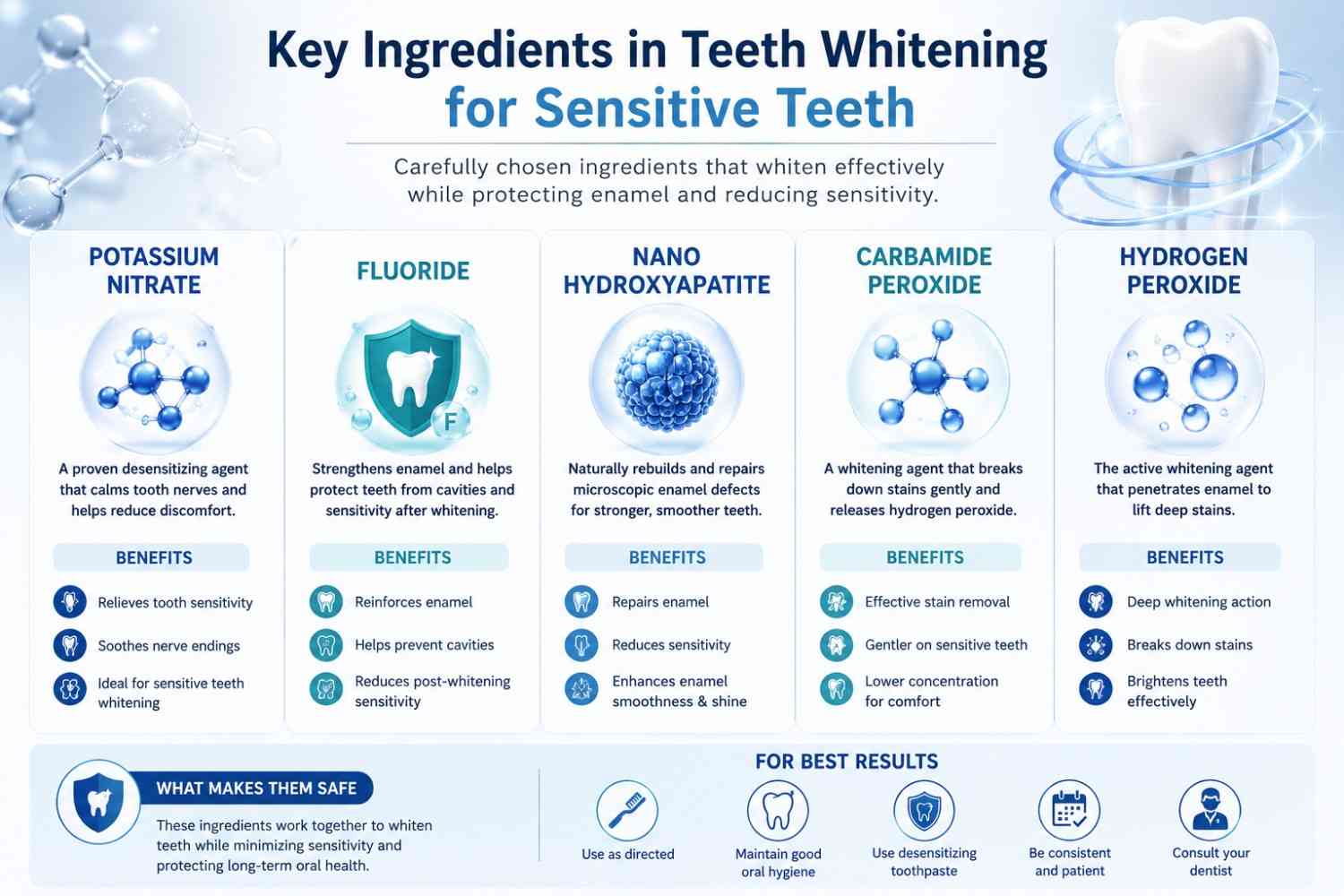
The best whitening products are those that concentrate on whitening rather than bleaching.
Check for the following attributes:
Lower Peroxide Concentration
Increased peroxide levels cause quicker whitening times, and sometimes can lead to increased sensitivity.
If you have sensitive teeth, then lower concentrations will do the job, but they may not be quite as effective.
Potassium Nitrate
Potassium nitrate soothes tooth nerves and is among the most researched component to ease the discomfort of whitening.
It’s a component of many sensitive whitening products recommended by dentists.
Fluoride
Fluoride can harden enamel and help to prevent temporary sensitivity following whitening.
Nano-Hydroxyapatite
The use of Nano-hydroxyapatite has increased in popularity due to its ability to repair microscopic enamel defects and reduce sensitivity.
There are many newer premium whitening formulas that use this ingredient.
Flexible Wear Times
Products that can be used a shorter period of time per day make it easier for the user to control the product if sensitivity develops.
Most available options for best teeth whitening for sensitive teeth are compared.
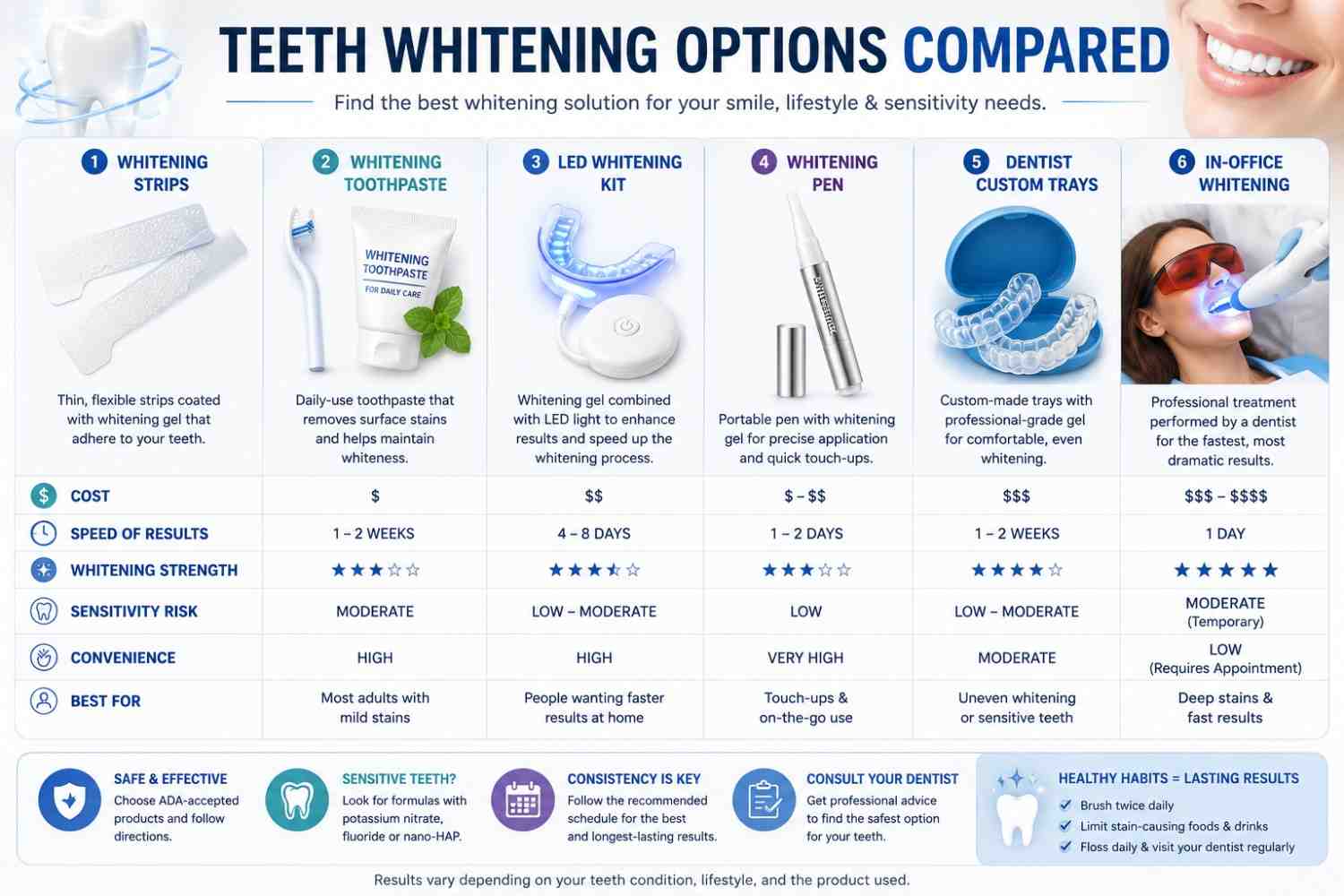
1. Sensitive Whitening Strips
Best for:
Most of the people who are mild sensitive.
Benefits
- Easy to use
- Affordable
- Consistent whitening
- Widely available in the United States
Drawbacks
- May lead to temporary sensitivity
- Less customized than dentist treatments
- Best used for those who want a dramatic whiteen in 1-2 weeks.
2. Whitening Toothpaste
Best for:
- Daily maintenance.
- Whitening toothpaste does not use peroxide products; it primarily cleans surface stains.
Pros
- Minimal sensitivity
- Completely safe for everyday use.
- Affordable
- It is very good at keeping dentists’ white teeth.
Cons
- Slower results
- Will not significantly affect deep tooth color
3. Whitening Pens
These can be used for:
- Small touch-ups
- Travel
- Maintaining whitening results
- Due to the reduced amount of whitening gel, a lot of users report to be less sensitive.
4. LED Whitening Kits
LED light kits are a combination of whitening gel and a light from a LED source.
Recent studies indicate that it is actually the whitening gel rather than the light that provides whitening results.
Pros:
- Convenient
- Uses gels that are sensitive to oxygen
- Will give a discernible whitening effect
Cons:
- Please note, results will differ depending on product.
- Higher upfront cost
5. Custom Trays Under Dentist Supervision
Frequently considered the gold standard.
Custom trays deliver:
- Enhanced gel dissemination
- Custom peroxide strengths
- Monitoring by professionals
- Less gum irritation
This option is particularly useful to those with moderate sensitivity.
6. In-Office Whitening with a Pro
A professional whitening will give you the quickest results but you may feel increased sensitivity for a short time.
Dentists can help to ease the discomfort with:
- Desensitizing gels
- Fluoride therapy
- Tailored whitening schedules
For patients with extreme sensitivity, dentists often recommend a few shorter appointments instead of one intensive appointment.
Herbs to Purchase
Pick products for whitening that contain:
- Potassium nitrate
- Fluoride
- Nano-hydroxyapatite
- Xylitol
- Carbamide peroxide (low concentrations)
- Hydrogen peroxide (low strength)
Ingredients which can make oils more sensitive.
- Look out for items that contain:
- Possibility of very high peroxide concentrations
- Very abrasive polishing agents
- Acidic whitening formulas
- Unverified whitening chemicals
Do not use products that advertise:
- “whitening in minutes”
- “Permanent whitening”
- “Zero sensitivity guaranteed”
How to Best Teeth Whitening For Sensitive Teeth Safely
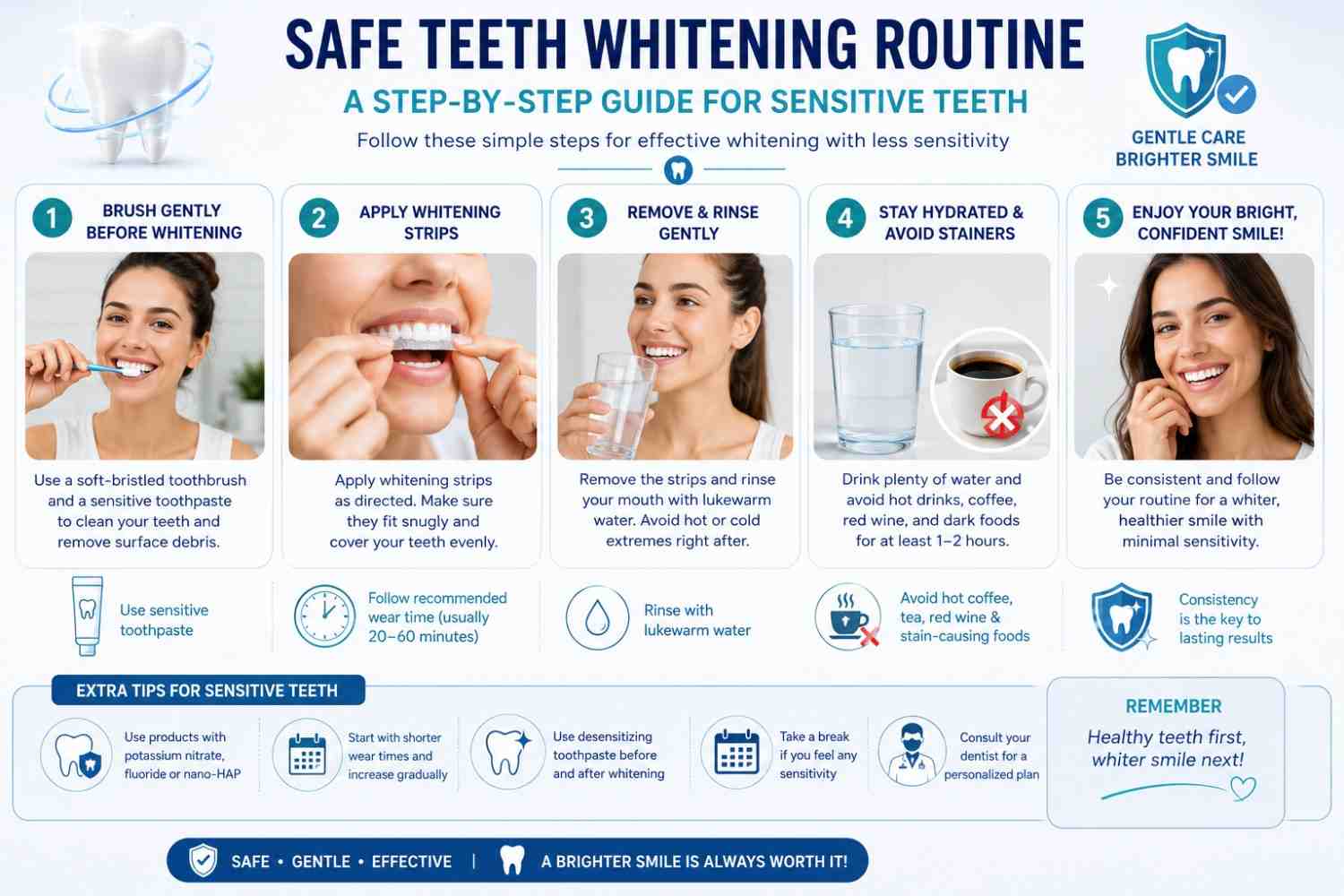
There are a number of simple steps that can go a long way to reducing discomfort.
Brush Before Whitening
- Do not use a toothbrush that has hard bristles!
- Be careful of over-brushing as that can contribute to sensitivity.
- Apply using Sensitive Toothpaste that’s used before treatment.
- For 1-2 weeks before whitening, many dentists suggest the use of sensitive toothpaste.
- This helps to lessen the sensitivity of the nerves prior to treatment.
Shorten Whitening Sessions
- Rather than sessions that are longer:
- Reduce the amount of time using the product.
- Slowly step up as tolerated
- Whitening lasts a little longer, but is generally much more beneficial.
If necessary, skip some of the treatments to follow.
- If sensitivity develops:
- Rest a day or two prior to continuing.
- This is not likely to have any major impact on the final outcome.
- Don’t eat very hot or very cold items.
During whitening:
Avoid:
- Ice water
- Hot coffee
- Very cold desserts
Temperatures can make it temporarily uncomfortable.
Stay Hydrated
Saliva flow is essential for remineralizing enamel that it is there.A healthy saliva flow is there to help remineralize enamel. During treatment increase fluid intake.Water, water, water!
The common mistakes in whitening which becomes sensitive.
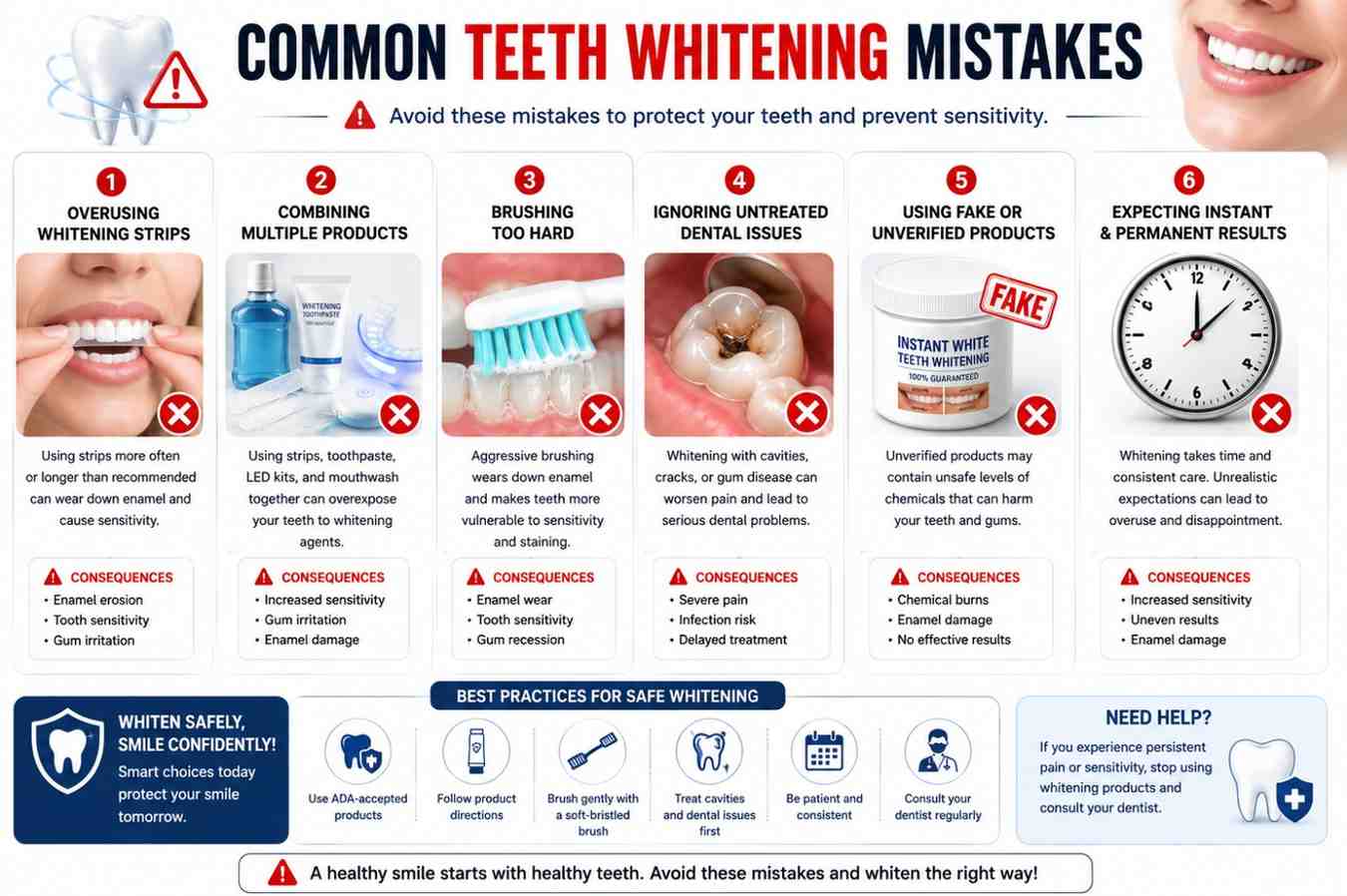
Many people make whitening ‘hurt more than it’s worth’ simply by accident! Avoid these mistakes:
Whitening too often
More isn’t better.
Follow manufacturers’ maintenance recommendations.
Cleaning with more than one whitening product.
Combining:
- Whitening toothpaste
- Strips
- LED kit
- Whitening mouthwash
- can cause overloading on the teeth.
Ignoring cavities
Using bleaching teeth when they have untreated cavities.
The peroxide can come into contact with the nerve and may have a terrible impact on your pain.
Reflects bright colors when compared to other teeth.
Bright in appearance following dental procedures.
Recent:
- Fillings
- Crowns
- Gum treatment
May need time to heal so that it can be whitened.
Please consult your dentist first.
Purchasing unaccredited products for best teeth whitening for sensitive teeth.
Unsafe levels of ingredients could be found in products made by unknown producers or vendors.
Purchases products with ingredient list and directions for safe use.
When and why people should avoid choosing a dentist to whiten their teeth?
If you have the following, you will need further professional advice:
- Severe tooth sensitivity
- Gum disease
- Cracked teeth
- Large fillings
- Dental crowns
- Veneers
- Pregnancy concerns
- Ongoing tooth pain
Whitening can’t be used until other dental problems are fixed.
The difference is between professional and At-Home Whitening.
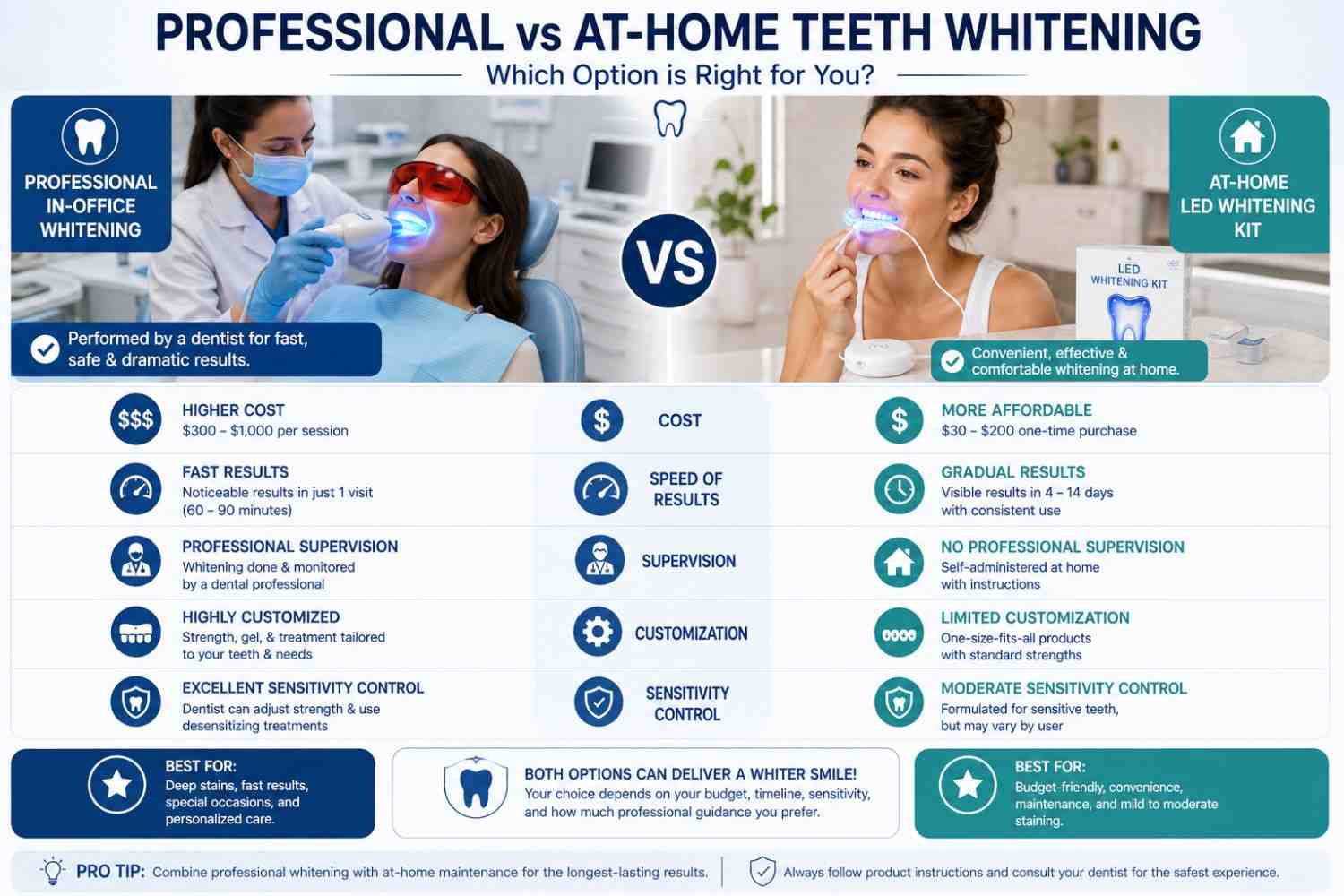
Cat’s Pajamas (At Home) Say hello to Mr. Whiskers’ Cat Nap! (Professional)
Cost Lower Higher
Speed Gradual Fast
Supervision None Dentist
Customization Limited High
Sensitivity Control Moderate Excellent
Mild stains: can be done yourself, but may require special handling for more stubborn areas such as deep stains or difficult cases.
How long do best teeth whitening for sensitive teeth results endure?
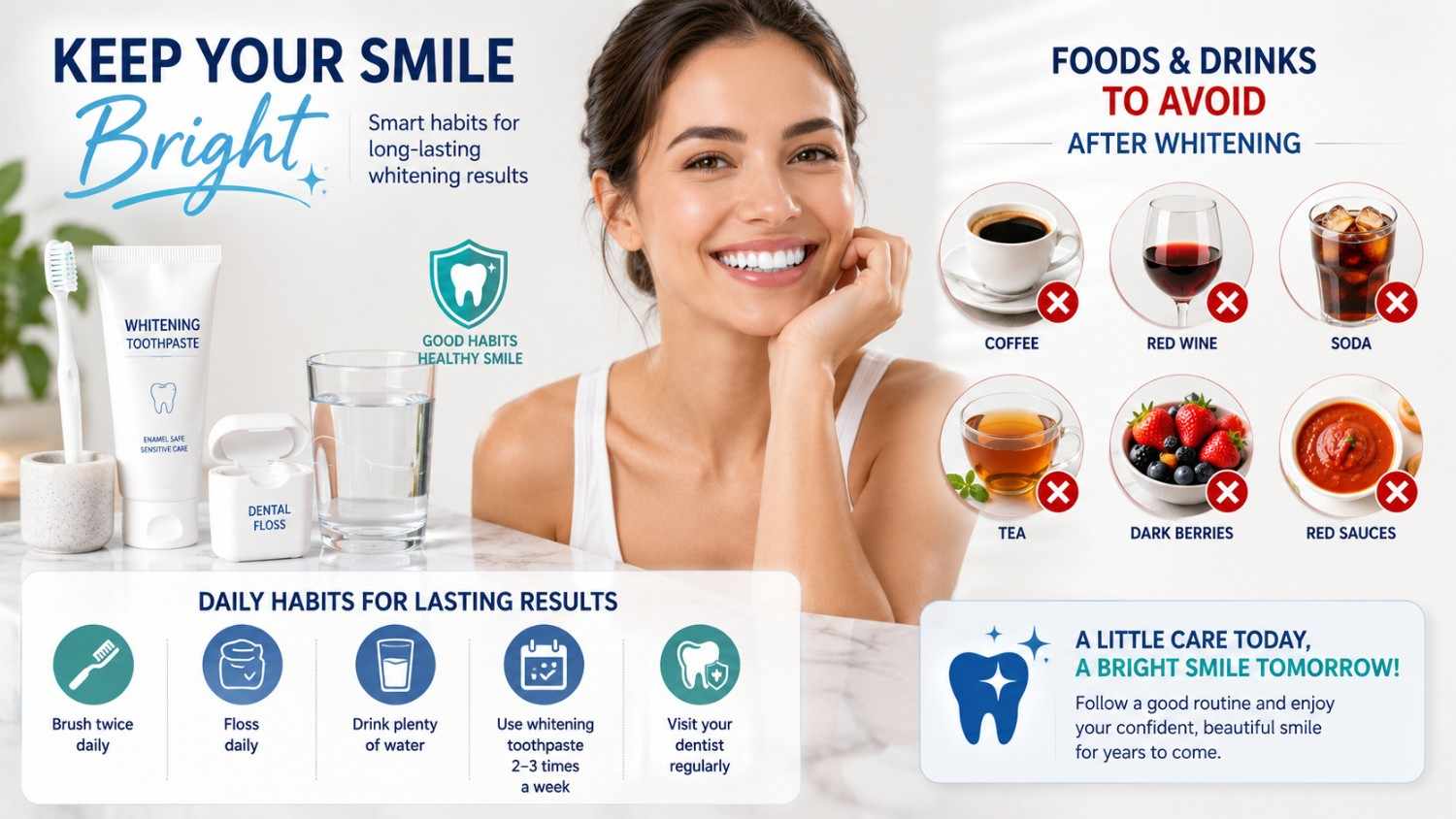
Your habits have an impact on your results.
Average whitening longevity:
Lifestyle Typical Results
Excellent maintenance 18–36 months
Average habits 12–24 months
Pregnant people who use coffee or (smoke) tobacco at high levels 6–12 months
Maintain results by:
- Brushing twice daily
- Limiting stain-causing beverages
- Serving coffee or wine with meals
- Try using whitening toothpaste on a regular basis, but limit your use to once a week or so.
- Regular dental Check-ups
Frequently Asked Questions
Can people with sensitive teeth safely whiten their teeth?
Yes. People who are the best teeth whitening for sensitive teeth can safely whiten their teeth if they have a product with less whitening peroxide, follow the products instructions, and use desensitizing toothpaste before and while whitening.
What whitening agent is least likely to be sensitive?
Some are less irritating due to their lower concentration of carbamide peroxide, which also releases hydrogen peroxide much more slowly in the formula than other types of hydrogen peroxide.
Is the whitening effect on enamel permanent?
No. A good whitening product, if used properly and as directed, should not harm the natural enamel. Temporary sensitivity is the most common side effect.
Does dental best teeth whitening for sensitive teeth work?
Often, yes. Dentists can tailor the strength of the peroxide, safeguard the gum tissue and employ tooth desensitizing treatment that reduces any discomfort for sensitive patients.
Does Toothpaste Whitening Take the Place of Whitening Strips?
Not usually. Whitening toothpaste works to remove color from the surface while whitening strips fail to work as well on the intrinsic color of teeth, which is located below the surface.
Key Takeaways
- With the best teeth whitening for sensitive teeth, it is not impossible to get whitened, but it does make it a bit more difficult.
- Comfort and effectiveness can be best achieved with lower-peroxide formulas with desensitizing ingredients.
- It’s better to ease into whitening over a shorter period of time normally, as opposed to going through the fast one.
- Applying the treatment with a sensitive toothpaste and following the instructions could decrease the sensitivity.
- Before any further whitening treatments are performed any persistent pain or great sensitivity should always be assessed by a licensed dentist.
Conclusion
The best teeth whitening for sensitive teeth isn’t necessarily about the most potent product, it’s about the right blend of strength, safety and comfort. In today’s world, whiten your smile, even if you’re one of those whose teeth are very sensitive, thanks to available advancements in technology.
If you are new to whitening, use a sensitive, gentle whitening product, and be careful following all the directions, and don’t rush the process. More even paler, fewer and less energetic applications generally end in more comfortable and also enduring outcomes.
If the discoloration is deep, you are still sensitive or you have more serious dental issues, ask for the opinion of a licensed dentist. Getting a custom-made whitening plan means whitening your smile and taking steps to protect your enamel and long-term oral health!
Adhere to the golden rule of any treatment: Healthy teeth receive first and a whiter smile second, no matter what kind of treatment you select, an at home kit or facility treatment.
Read more: Best Toothpaste for Whitening Teeth