
Table of Contents
Losing weight does not necessarily mean you have to avoid every social event, dinner out, or weekend drink. But alcohol can make calorie control harder than it looks. The drink itself contains calories, mixers can add sugar, and a few drinks can make it easier to overeat.
What is the best alcohol for weight loss?
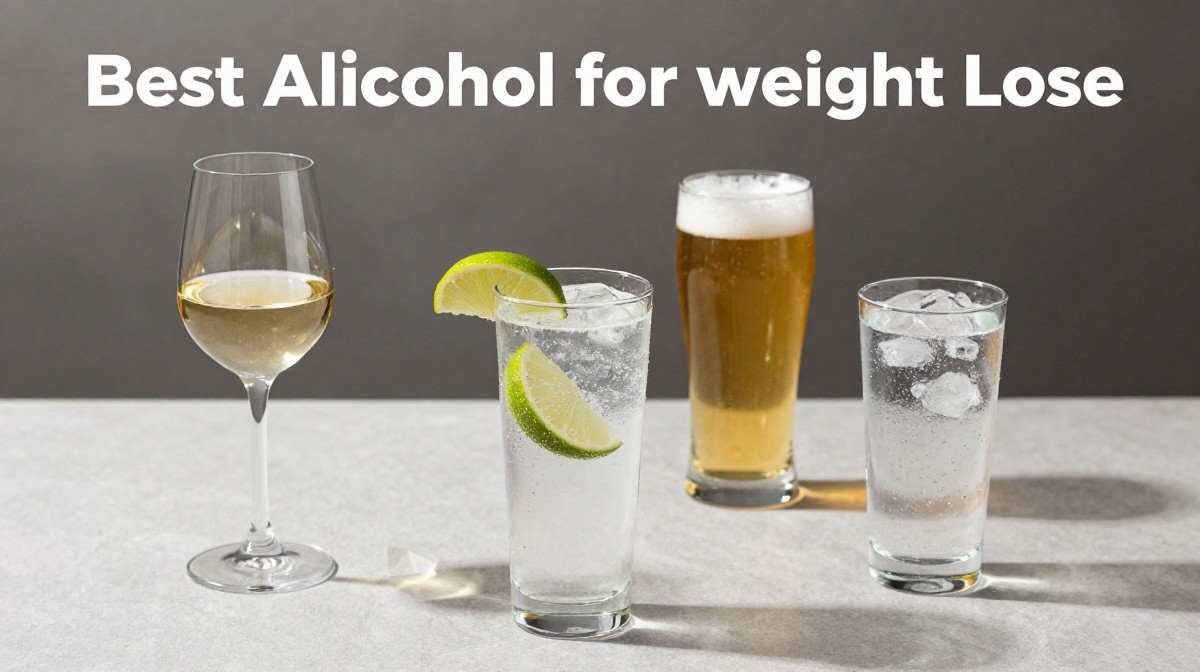
The honest answer is that no alcoholic drink actively causes weight loss. If you choose to drink, the better options are generally drinks with fewer added sugars and controlled portions. A simple spirit mixed with a zero-calorie mixer, a modest glass of dry wine, or a lower-calorie beer can fit more easily into a calorie-conscious eating pattern than sugary cocktails.
This guide explains which choices tend to be more calorie-friendly, what to order at a U.S. bar or restaurant, common mistakes to avoid, and how to keep alcohol from quietly derailing your progress.
Important: If you do not drink, there is no health or best alcohol for weight loss reason to start. People who are pregnant, under the legal drinking age, taking medications that interact with alcohol, or who have certain medical conditions should avoid alcohol. When in doubt, speak with a healthcare professional.
Is There Really a Best Alcohol for Weight Loss?
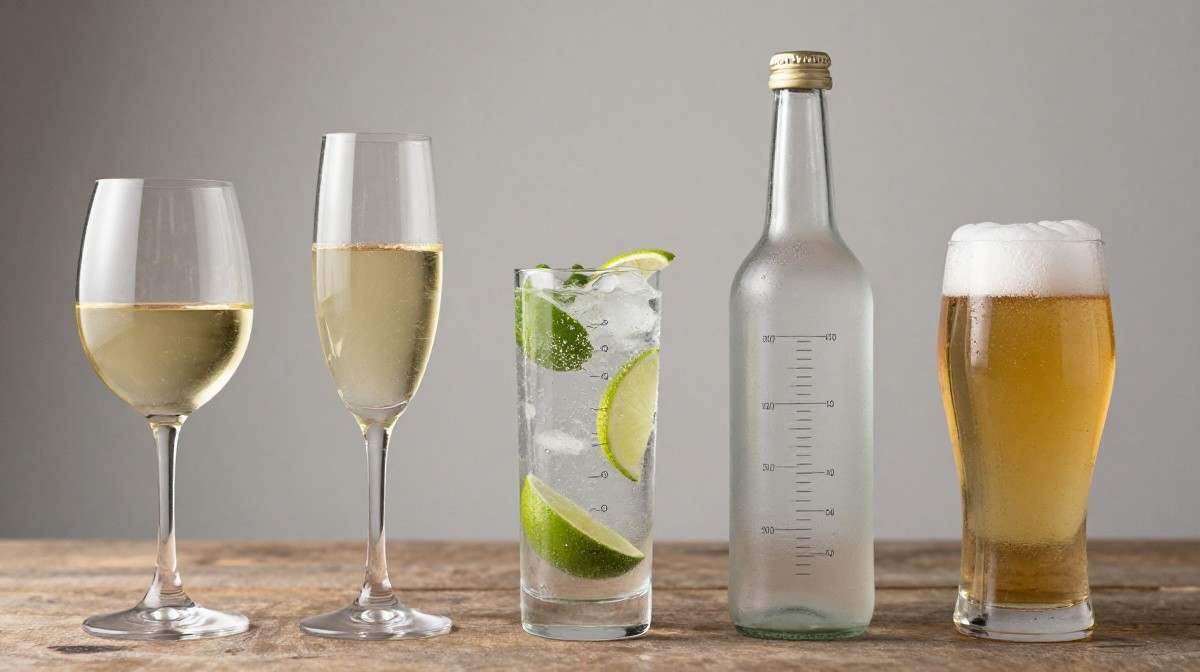
There isn’t one universal “best” drink because the total calories depend on the alcohol content, serving size, mixers, and how many drinks you have.
For weight management, the most useful principle is simple:
Choose smaller portions, limit sugary mixers, and keep your overall alcohol intake moderate.
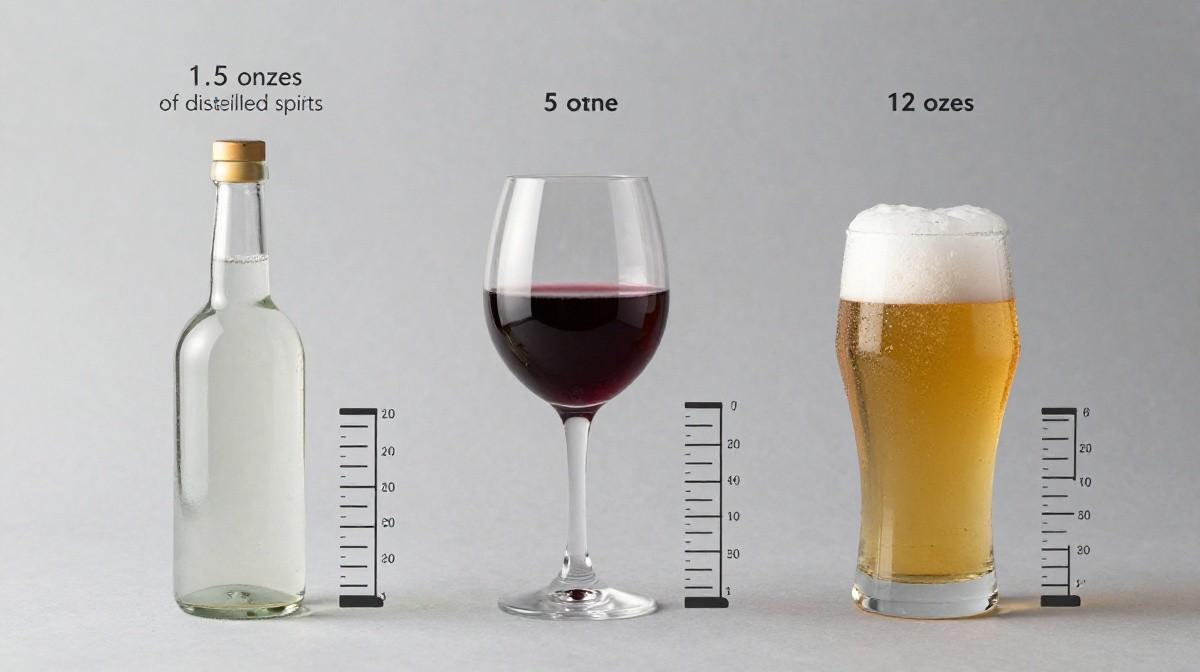
Alcohol itself provides calories, even when a drink contains little or no added sugar. A 1.5-ounce serving of 80-proof distilled spirits, for example, contains the same amount of alcohol as a standard 5-ounce serving of table wine or a 12-ounce regular beer. In the United States, each represents about 14 grams of pure alcohol.
That means switching from a sugary cocktail to straight liquor does not make the alcohol calorie-free. It simply removes some of the additional calories that can come from syrups, juices, soda, cream, or sweetened liqueurs.
What matters most?
When comparing drinks, look at:
- Alcohol percentage (ABV)
- Serving size
- Added sugar
- Mixers
- Number of drinks
- How the drink affects your eating afterward
The last point is easy to overlook. A drink that looks relatively low in calories may still work against your goals if it leads to late-night snacking or several additional drinks.
7 Lower-Calorie Alcohol Choices to Consider
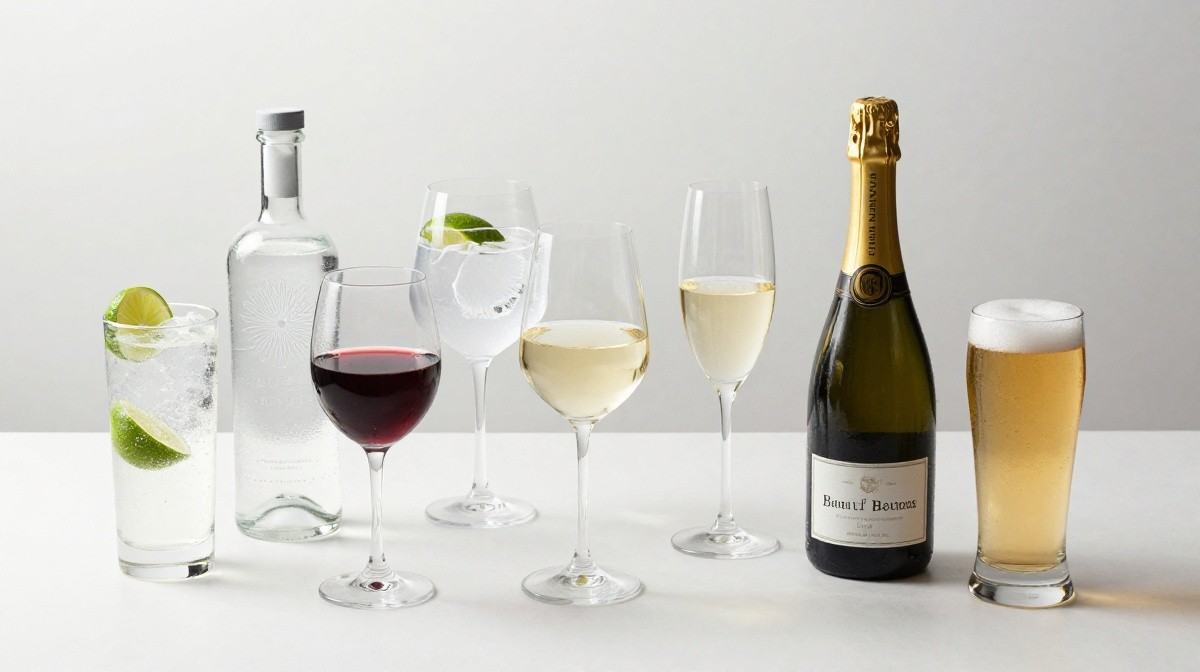
If you drink and want to manage your calorie intake, these options can be easier to fit into a best alcohol for weight loss plan.
1. Vodka or tequila with soda water
A standard serving of vodka or tequila with sparkling water and fresh lime is one of the simplest choices at a bar.
There is no sugary soda, syrup, cream, or large amount of fruit juice. The important detail is portion control: ask for a standard pour rather than assuming a large glass contains one drink.
This makes a spirit-and-soda combination a practical contender for the best alcohol for weight loss when compared with many sweet cocktails.
Try:
1.5 ounces vodka or tequila + soda water + fresh lime.
Watch out for: tonic water. Regular tonic contains added sugar and can significantly change the calorie content of an otherwise simple drink.
2. Gin with soda water
Gin can work similarly to vodka when paired with soda water rather than a sugary mixer.
For a refreshing option, order gin, soda water, and lemon or lime. If you’re ordering at a restaurant, specify that you don’t want simple syrup or sweetened mixer.
The botanical flavors in gin can make a simple drink satisfying without requiring a large amount of juice or sugar.
3. Dry red or white wine
Wine can be a reasonable choice when you prefer something you can sip slowly with a meal.
Dry wines generally contain less residual sugar than sweet wines, although calorie content varies by wine, alcohol level, and serving size.
A major issue is glass size. A restaurant pour can be considerably larger than the U.S. standard serving of 5 ounces.
Practical tip: If you’re tracking calories, measure your usual wine pour at home once or twice. It can be surprisingly easy to pour more than you intended.
4. Brut sparkling wine
Brut sparkling wine can be a useful alternative to sweeter sparkling wines because “brut” generally indicates a relatively dry style.
Champagne, cava, and other sparkling wines vary in calories, so the label and serving size still matter.
If you enjoy sparkling wine, keep the pour modest and avoid turning it into a cocktail loaded with syrups or sweet liqueurs.
5. Light beer
Light beer can be useful for people who prefer beer but want to reduce calories.
However, don’t assume every beer labeled “light” is dramatically lower in alcohol. NIAAA notes that some light beers have almost as much alcohol as regular beer.
Also pay attention to the can or bottle size. A 16-ounce serving is larger than the 12-ounce serving commonly used when defining a U.S. standard drink.
6. Hard seltzer
Hard seltzer can be another relatively straightforward option because many products combine alcohol, carbonated water, and flavoring without the large amount of sugar found in some traditional cocktails.
Still, “hard seltzer” is not automatically synonymous with low calorie. Alcohol content and serving size differ between products.
Check the nutrition label when available, especially if you’re comparing brands.
7. Whiskey or bourbon with water or ice
If you enjoy darker spirits, whiskey or bourbon served over ice or with a little water avoids the added sugar found in many mixed drinks.
The calories from the alcohol remain, so portion size matters. A generous pour can easily contain more than one standard drink.
For calorie-conscious drinking, a measured pour is more useful than simply choosing a particular type of liquor.
Alcohol Choices to Limit When You’re Losing Weight
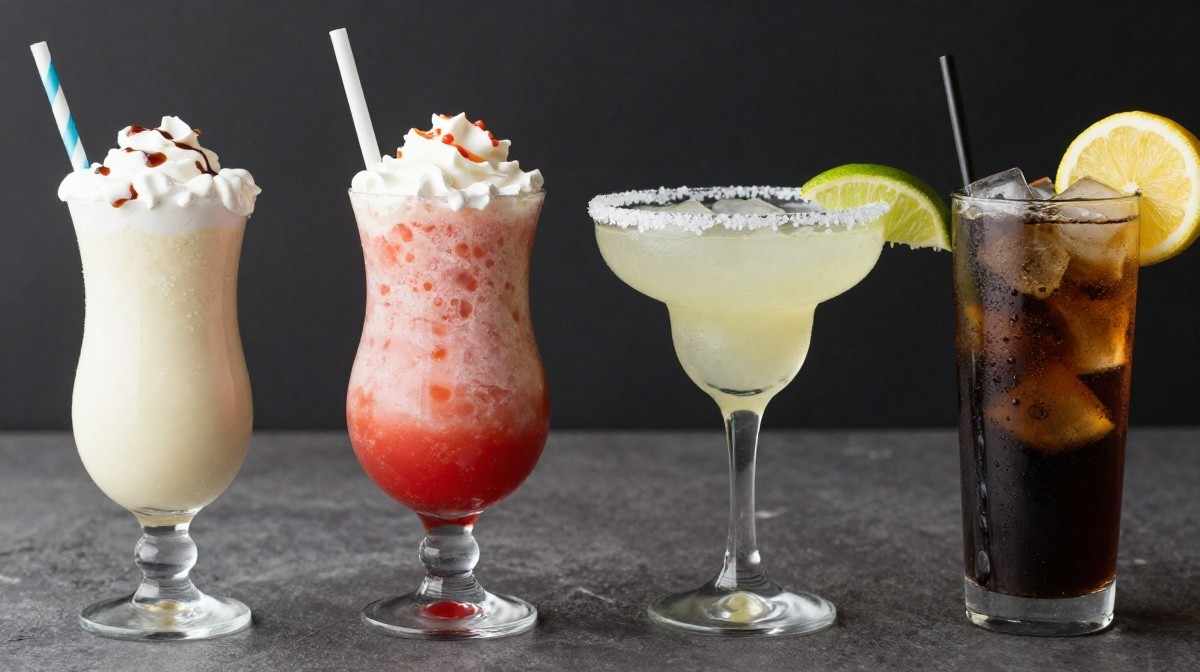
Knowing what to order is only half the equation. Some drinks can pack a surprising amount of calories because alcohol is combined with sugar, cream, or large portions.
Sugary cocktails
Examples include:
- Piña coladas
- Frozen margaritas
- Mudslides
- Daiquiris
- Sweet martinis
- Cream-based cocktails
- Cocktails made with several ounces of fruit juice
These drinks can contain alcohol plus substantial amounts of added sugar and other calorie-containing ingredients.
Regular soda mixers
Rum and cola, whiskey and cola, and similar drinks can become much more calorie-dense when regular soda is used.
A simple substitution such as diet cola, club soda, or sparkling water can reduce calories from the mixer.
Cream-based cocktails
Cream, coconut cream, sweetened condensed milk, and flavored liqueurs can dramatically increase the calorie content of a drink.
These beverages may be appropriate for an occasional treat, but they are not ideal if your priority is keeping alcohol calories predictable.
How Many Calories Are in Alcohol?
Alcohol contains approximately 7 calories per gram. That makes it more calorie-dense than protein or carbohydrates, which provide about 4 calories per gram.
But calculating the exact calories in an alcoholic beverage is complicated because the drink may also contain:
- Sugar
- Juice
- Syrups
- Cream
- Coconut products
- Soda
- Liqueurs
- Other ingredients
This is why two drinks containing the same amount of alcohol can have very different total calorie counts.
A simple comparison
| Drink type | Typical approach for calorie control | Main concern |
| Spirit + soda water | Keep pour measured | Alcohol calories |
| Dry wine | Keep serving around 5 oz | Pour size |
| Brut sparkling wine | Small glass | Serving size |
| Light beer | Choose smaller serving | Alcohol and carbs |
| Hard seltzer | Check nutrition label | Brand variation |
| Sugary cocktail | Limit or skip | Sugar + alcohol |
| Cream cocktail | Occasional treat | High-calorie ingredients |
These are general comparisons, not exact calorie counts. Recipes and brands vary substantially.
How to Drink Alcohol Without Derailing Weight Loss
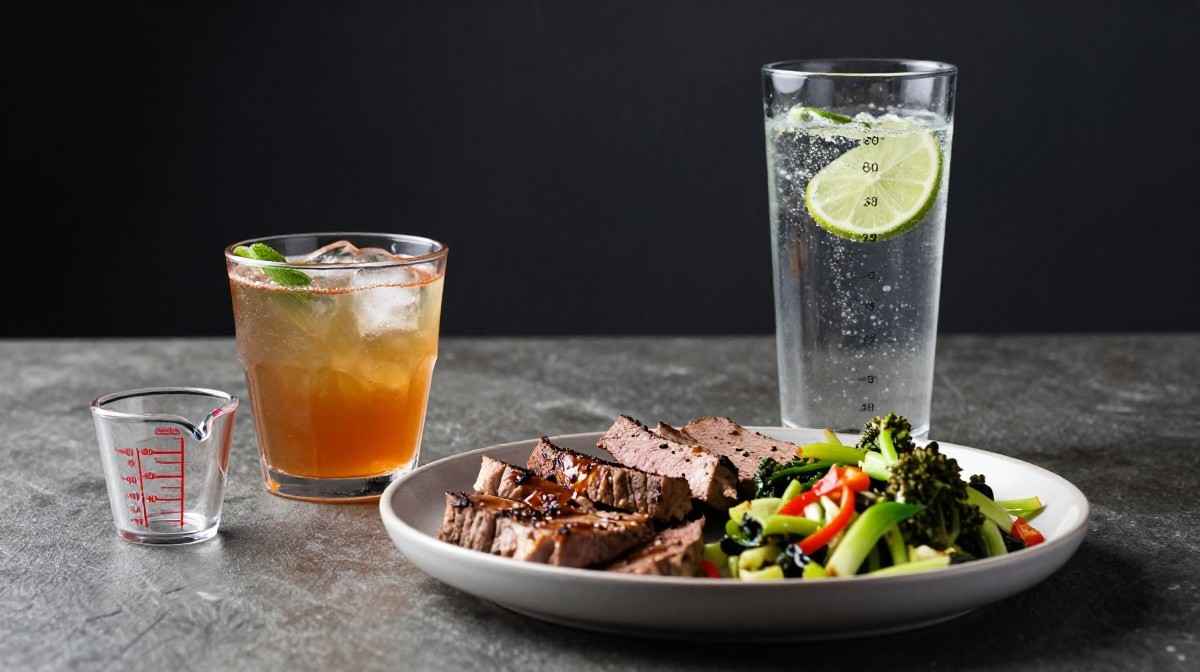
Finding the best alcohol for weight loss matters less than your overall drinking pattern.
Here are practical strategies that can make a bigger difference.
1. Decide your limit before the first drink
Don’t make the decision after you’ve already started drinking.
If you know you’ll have one drink with dinner, you’re less likely to turn a planned drink into an unplanned evening of drinking.
In the U.S., NIAAA defines one standard drink as approximately 12 ounces of 5% beer, 5 ounces of 12% wine, or 1.5 ounces of 40% distilled spirits.
Remember that a cocktail can contain more than one standard drink.
2. Alternate alcohol with water
Have a glass of water before or alongside your alcoholic drink.
This can help you slow down and makes it easier to avoid automatically ordering another drink.
Sparkling water with lime is also a useful option when you want something that feels like a proper beverage rather than simply “nothing.”
3. Eat before drinking
Drinking on an empty stomach can make it easier to lose track of how much you’ve consumed.
A balanced meal containing protein, vegetables, and fiber can help you make more deliberate food choices later.
That doesn’t mean you need to “save calories” all day for alcohol. Extreme restriction can backfire by leaving you hungry when you start drinking.
4. Avoid the liquid-calorie trap
A spirit may be relatively simple, but adding several ounces of juice, syrup, or sweetened mixers can change the drink considerably.
When ordering, try phrases such as:
- “Soda water instead of tonic.”
- “No simple syrup.”
- “Fresh lime instead of sweet-and-sour mix.”
- “Single pour, please.”
These small changes can make restaurant and bar orders more predictable.
5. Don’t compensate with extreme dieting
One of the most common mistakes is skipping meals to “make room” for alcohol.
A better approach is to maintain your normal eating pattern and account for the drink without turning the rest of the day into a starvation exercise.
Sustainable weight management is about the overall pattern—not making every individual day perfect.
Common Alcohol and Weight-Loss Mistakes
Mistake 1: Assuming clear liquor is healthy
Clear spirits may contain fewer calories from added ingredients when served simply, but alcohol itself still contributes calories.
“Clear” does not mean “weight-loss friendly.”
Mistake 2: Ignoring serving size
A 3-ounce pour of liquor is roughly twice the amount of a 1.5-ounce U.S. standard serving.
Similarly, a large wine glass filled generously may contain more than one standard drink.
Mistake 3: Counting only the alcohol
A margarita isn’t just tequila. Depending on the recipe, it may contain sweetened mixers, liqueur, syrup, and other ingredients.
When estimating calories, consider the complete drink.
Mistake 4: Forgetting food calories
Alcohol often appears alongside appetizers, restaurant meals, desserts, and late-night snacks.
Sometimes the food consumed while drinking contributes more excess energy than the drink itself.
Mistake 5: Treating alcohol as part of a “healthy diet”
Alcohol is not a necessary nutrient and should not be added to a diet for supposed health benefits.
If your primary goal is weight loss, reducing or eliminating alcohol may make calorie management easier.
What Is the Best Alcohol for Weight Loss at a Bar?
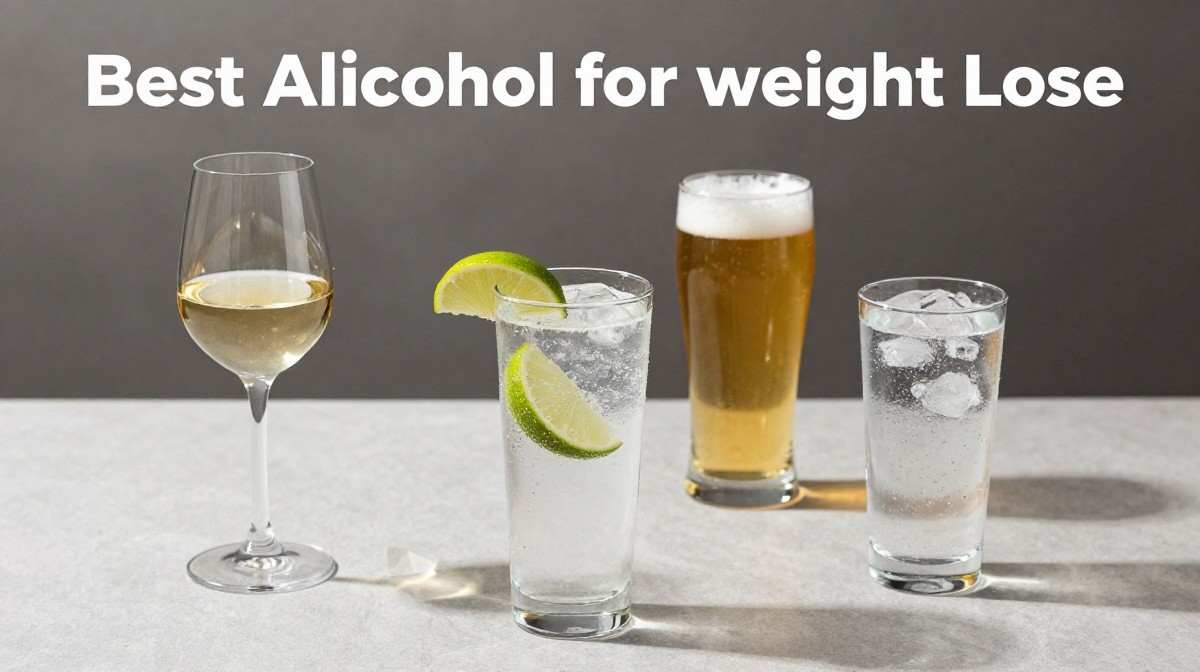
If you’re at a U.S. bar or restaurant and want a straightforward choice, consider a single spirit with soda water and lime, a modest serving of dry wine, or a lower-calorie beer.
The best alcohol for weight loss is usually the option that gives you the flavor you want with the fewest unnecessary ingredients—and that you can comfortably limit to a sensible portion.
A useful ordering strategy is:
- Choose your alcohol.
- Choose a low-calorie mixer.
- Request a standard pour.
- Drink slowly.
- Have water alongside it.
- Stop when you’ve reached your planned amount.
You don’t need to find a magical “diet alcohol.” You need a repeatable strategy.
Does Alcohol Stop Fat Loss?
Alcohol does not automatically stop fat loss after one drink, but it can make maintaining a calorie deficit more difficult.
Your body prioritizes metabolizing alcohol because it cannot store alcohol in the same way it stores carbohydrate, fat, and protein. During that process, the oxidation of other fuels can be reduced.
More importantly for many people, drinking can affect food choices, portion control, sleep, and consistency with healthy routines.
That is why your overall pattern matters more than whether you choose vodka, wine, beer, or tequila.
If you are struggling to lose weight despite consistently eating well, consider looking at the entire week rather than focusing only on individual drinks.
Frequently Asked Questions
What is the lowest-calorie alcoholic drink?
A measured serving of distilled spirits mixed with a zero-calorie beverage such as soda water can be one of the simpler lower-calorie options. The exact calorie count depends on the spirit and serving size.
Is vodka better than beer for weight loss?
Not automatically. A measured vodka-and-soda drink can contain fewer calories than some beers, but alcohol content and serving size matter. A large pour of vodka can easily provide more alcohol and calories than expected.
Can I drink alcohol and still lose weight?
Yes, some people can lose weight while drinking occasionally, provided their overall calorie intake and lifestyle support best alcohol for weight loss. However, reducing alcohol can make calorie control easier for some people.
Is red wine good for weight loss?
Red wine is not a weight-loss food. A modest serving can fit into some people’s calorie budgets, but it still contains alcohol and calories. Claims that wine directly promotes weight loss should be treated cautiously.
Is it better to stop drinking completely when trying to lose weight?
For some people, yes. Eliminating alcohol removes its calories and can simplify food and portion decisions. It can also be especially important for people who should avoid alcohol for medical, pregnancy, medication, or alcohol-use reasons.
Final Takeaway
Choosing the best alcohol for weight loss is less about finding a special type of alcohol and more about controlling the variables that come with drinking.
If you choose to drink, focus on:
- Smaller, measured portions
- Lower-sugar mixers
- Dry rather than sweet styles when appropriate
- Water between drinks
- Fewer drinking occasions
- Avoiding calorie-heavy cocktails
- Keeping your overall diet consistent
For many people, a simple spirit with soda water, a modest dry wine, or a lower-calorie beer can be easier to fit into a calorie-conscious plan than sugary cocktails.
Most importantly, don’t let one drink—or one evening—turn into an all-or-nothing approach. Sustainable weight management comes from what you do consistently over weeks and months.
If weight loss is your priority, start by tracking your drinks for a week. You may discover that serving size and frequency matter much more than the specific alcohol you choose.
Health note: U.S. alcohol guidance and individual recommendations can vary based on health status, medications, pregnancy, age, and drinking patterns. NIAAA notes that abstaining is the safest choice for certain groups and circumstances.
Read More: Best Protein Powder for Weight Loss Female: How to Choose the Right One