
Table of Contents
If you’re considering an oral-health supplement, the biggest question isn’t whether the ingredient list sounds impressive. It’s whether the product’s claims are supported by good evidence, whether the formula is transparent, and whether it adds anything useful to a solid dental-care routine.
provadent is marketed in the USA as a daily oral-health supplement focused on the oral microbiome, fresh breath, gum health, plaque control, and general dental wellness. Manufacturer pages describe a formula containing xylitol, cranberry extract, purple carrot powder, a proprietary enzyme blend, and probiotic strains.
This guide takes a practical look at the product rather than treating marketing claims as proven facts. You’ll learn what it is, what its ingredients are intended to do, what current research says about oral probiotics, how it should fit into everyday dental care, and what to check before spending money.
What Is provadent?
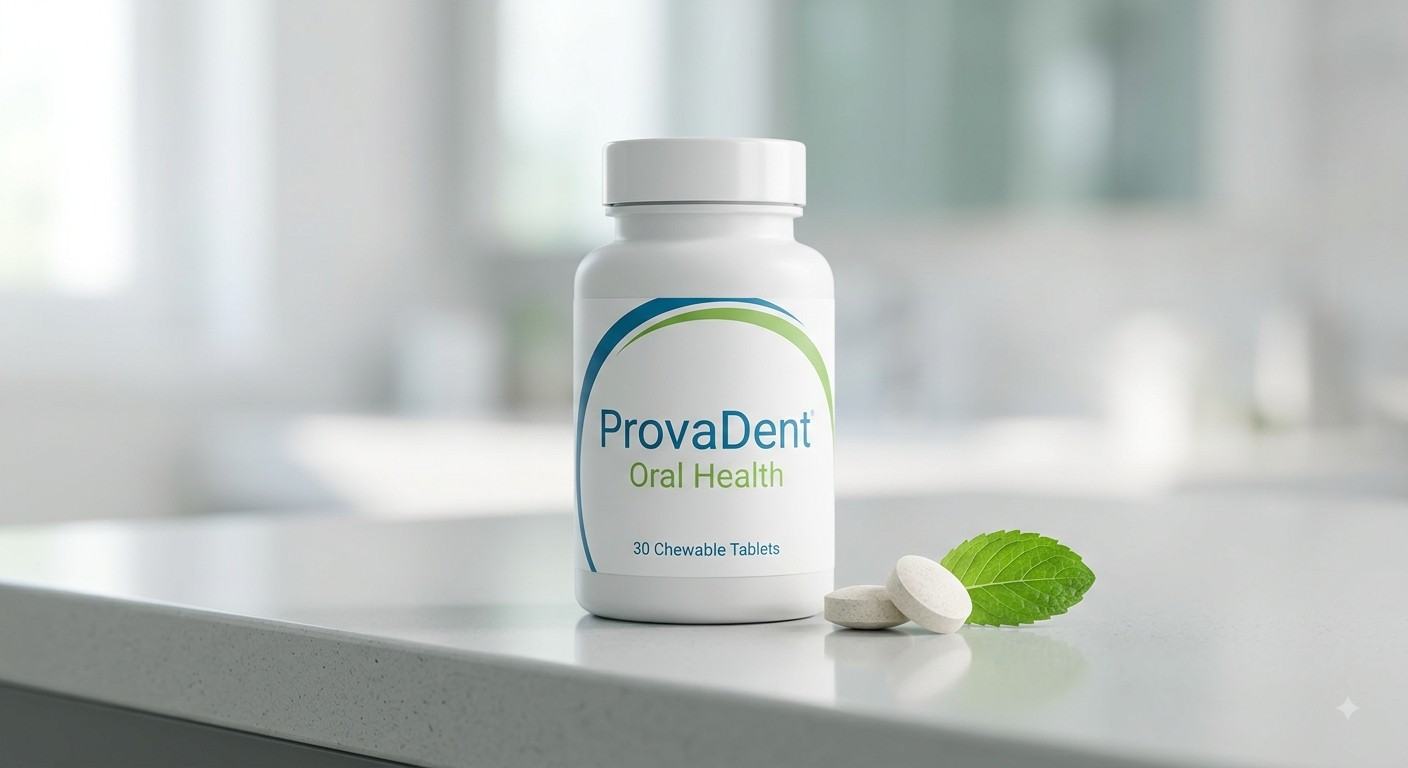
provadent is sold as a chewable dietary supplement intended to support oral health. Unlike toothpaste, fluoride gel, or conventional mouthwash, it is positioned as an oral-microbiome product that you take as part of a daily routine.
The manufacturer’s current pages describe two chewable tablets per day and highlight ingredients including xylitol, cranberry extract, purple carrot powder, BioFresh™ Clean Complex, and a four-strain probiotic blend.
The important distinction is this: a supplement can support oral health, but that does not make it a treatment for cavities, periodontal disease, or other dental conditions.
That matters because the FDA does not pre-approve dietary supplements for safety and effectiveness before they are marketed. Companies are responsible for ensuring their products are safe, properly labeled, and compliant with applicable requirements.
What does the oral microbiome have to do with dental health?
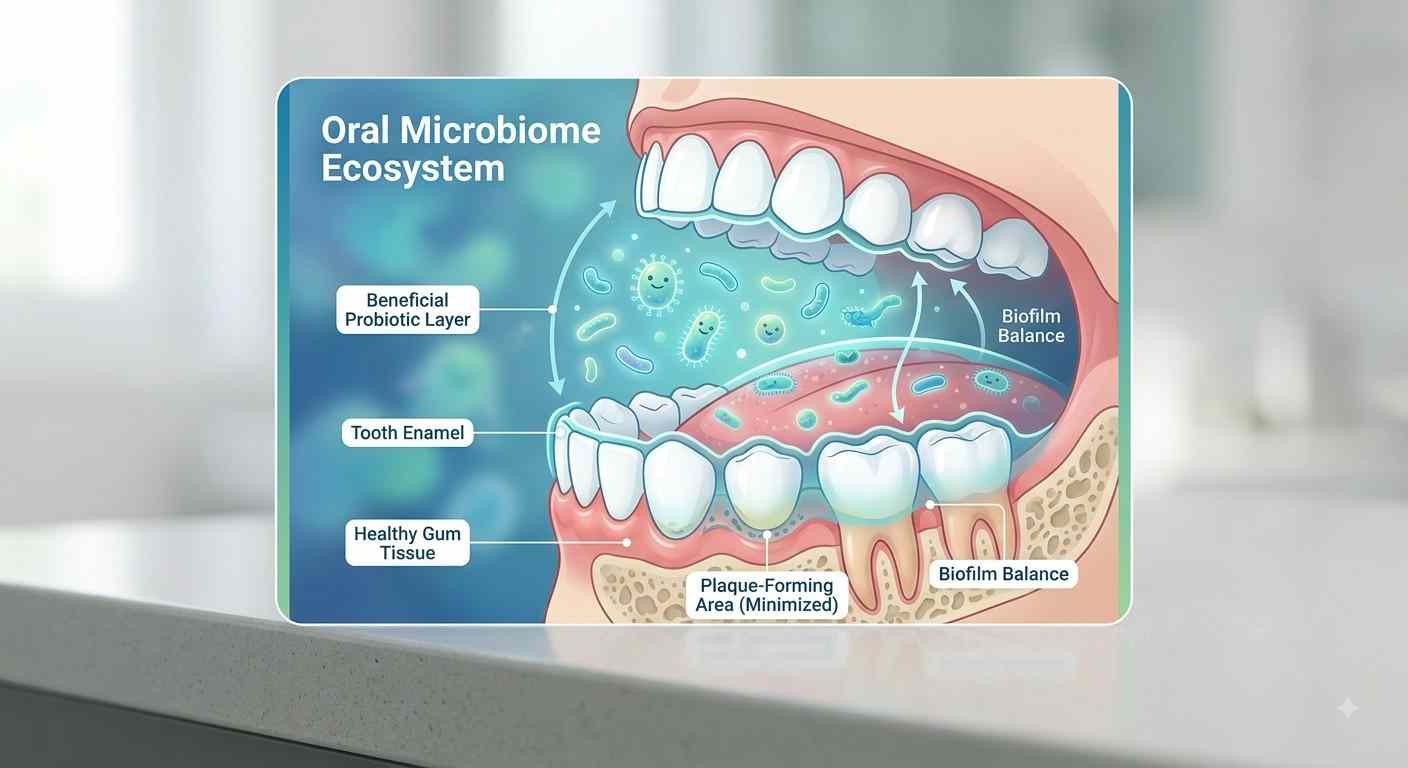
Your mouth contains a large community of microorganisms. A healthy oral environment depends partly on maintaining a reasonable balance among them.
Research into probiotics is promising, but it is not a simple “good bacteria versus bad bacteria” story. A 2024 systematic review found potentially favorable effects from probiotics as an adjunct for periodontal disease, while also noting that more research is needed to determine the most useful strains, doses, and treatment periods.
So the concept behind an oral probiotic is scientifically plausible. That is different from proving that one particular commercial formula will deliver every benefit advertised for it.
provadent Ingredients: What Does the Formula Contain?
The published product information identifies several ingredients that are worth examining individually.
| Ingredient | Why it is included | What to know |
| Xylitol | Supports a less cavity-friendly environment and stimulates saliva | Xylitol is commonly used in sugar-free dental products |
| Cranberry extract | Intended to discourage bacterial adhesion | Evidence is interesting, but ingredient-level research does not automatically validate the finished product |
| Probiotics | Intended to support oral microbial balance | Benefits can be strain-specific |
| BioFresh™ Clean Complex | Marketed for biofilm support | Proprietary blends deserve closer label scrutiny |
| Purple carrot powder | Provides plant compounds and antioxidants | Evidence for the whole ingredient is less important than evidence for the finished formula |
Xylitol
Xylitol is one of the more familiar dental ingredients in the formula. The ADA notes that sugar-free gum containing xylitol may contribute to reduced caries risk when used alongside regular brushing and interdental cleaning. It also increases salivary flow.
That does not mean swallowing a xylitol-containing supplement replaces fluoride toothpaste. Fluoride remains a central part of evidence-based cavity prevention.
Probiotics
This is arguably the most interesting part of the formula. Oral probiotic research has investigated whether selected microorganisms can influence plaque, gingivitis, periodontal pathogens, and inflammation.
However, probiotic effects are often strain-specific. A product saying it contains “probiotics” does not tell you enough to reproduce the results of a clinical study unless the relevant strains, quantities, and delivery method are clearly identified.
That is one reason shoppers should examine the actual Supplement Facts panel rather than relying solely on advertising language.
How to Use provadent as Part of an Oral-Care Routine
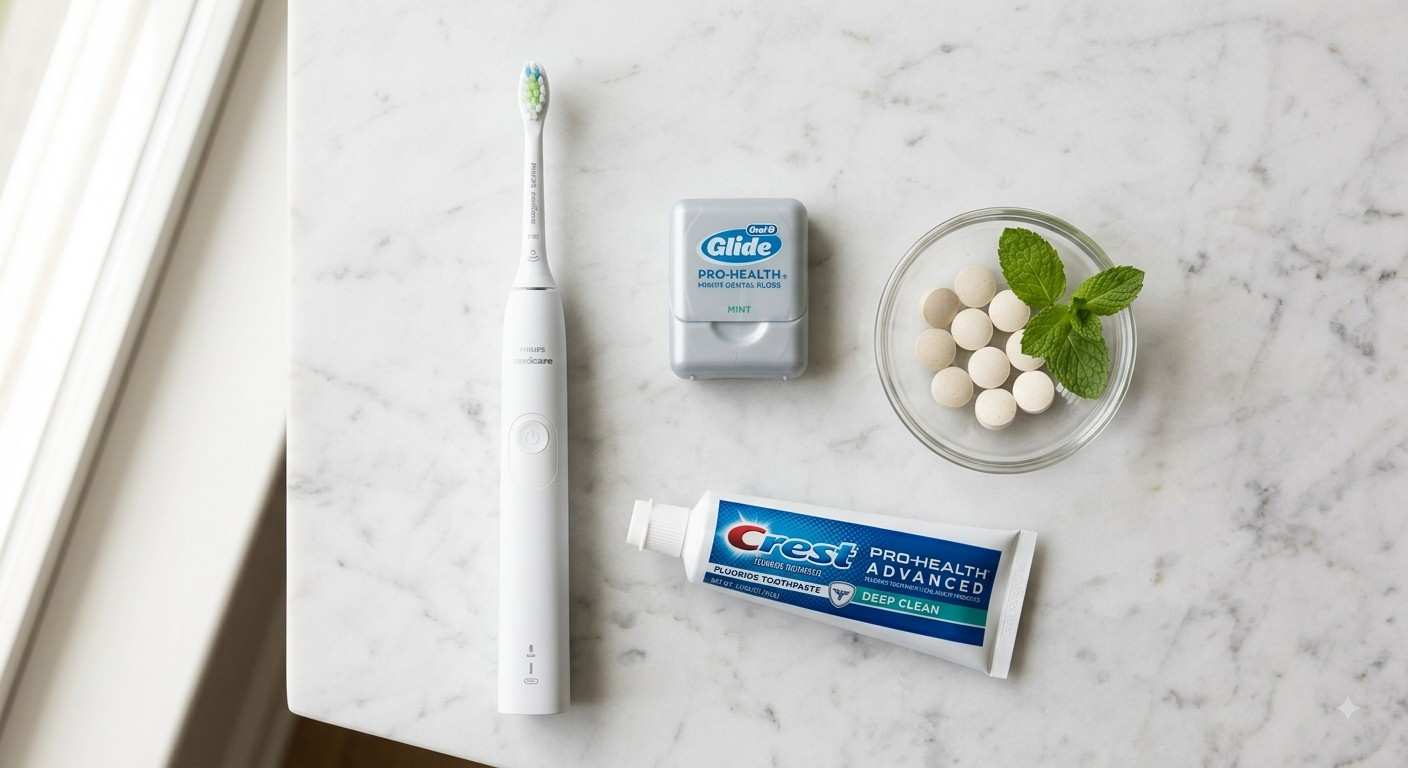
According to the manufacturer’s instructions, the suggested routine is two chewable tablets daily, with one commonly recommended after breakfast and another before bedtime.
If you decide to use provadent, think of it as an addition to oral hygiene rather than the foundation of your dental care.
A sensible routine looks like this:
- Brush twice daily for two minutes with fluoride toothpaste.
- Clean between your teeth once a day with floss or another interdental cleaner.
- Follow the product’s label directions rather than increasing the dose because you want faster results.
- Keep regular dental examinations and professional cleanings based on your dentist’s advice.
- Limit frequent exposure to sugary foods and drinks.
- Consider a supplement only after you’ve established the basics.
The American Dental Association recommends brushing twice daily with fluoride toothpaste and cleaning between teeth daily.
A supplement cannot physically remove hardened calculus, restore a badly damaged tooth, or replace professional treatment for periodontal disease.
Why the basics still matter
If you have persistent gum bleeding, swelling, tooth pain, loose teeth, facial swelling, or a suspected cavity, arranging a dental examination is more important than adding another supplement.
Is provadent Backed by Strong Evidence?
The fairest answer is partly, but not conclusively at the finished-product level.
There is legitimate scientific interest in oral probiotics. A 2024 systematic review found generally favorable findings across many studies involving periodontal disease, but the authors also called for additional research on specific strains, dosages, and treatment duration.
That distinction is crucial.
There is a hierarchy of evidence:
- Research on an individual ingredient
- Research on a particular probiotic strain
- Research on a combination of ingredients
- Randomized trials on the exact finished product
- Independent replication of those results
The strongest evidence for a commercial health product comes from studies on the exact finished formulation, performed by credible researchers and reported transparently.
Current product pages make broad claims about oral health benefits and describe the formulation as scientifically developed, but those marketing statements should not be treated as equivalent to independent clinical evidence on the finished product.
There’s another important point for U.S. shoppers: phrases such as “FDA-approved” can be misleading when applied to dietary supplements. The FDA specifically states that it does not approve dietary supplements for safety and effectiveness before they reach the market.
An FDA-registered manufacturing facility is not the same thing as an FDA-approved supplement.
Common Mistakes to Avoid When Using provadent
Buying an oral supplement isn’t necessarily a bad decision. The problem is expecting it to do a dentist’s job.
Here are the mistakes worth avoiding:
1. Replacing fluoride toothpaste
Don’t abandon fluoride toothpaste because a supplement claims to strengthen enamel. The ADA recommends fluoride toothpaste twice daily for most people.
2. Treating gum bleeding as normal
Occasional irritation can have many causes, but persistent bleeding deserves professional attention. A supplement shouldn’t be used to postpone a dental examination.
3. Assuming “natural” means risk-free
Natural ingredients can still cause side effects or interact with medications. The FDA recommends discussing dietary supplements with a healthcare professional, particularly when medications, pregnancy, breastfeeding, or medical conditions are involved.
4. Ignoring label transparency
Before purchasing, look for:
- Full ingredient names
- Amount per serving
- Probiotic strain identification
- CFU information where applicable
- Serving size
- Manufacturer or distributor information
- Lot or batch information
- Clear refund terms
If important information is hidden behind vague proprietary terminology, comparison becomes much harder.
Is provadent Worth Buying in the USA?
For a shopper in the United States, provadent may be worth considering as an optional oral-health supplement if the goal is to explore an oral-probiotic approach while continuing evidence-based dental care.
But I would not make the purchase based solely on claims such as “stronger teeth,” “eliminates bad breath,” or “prevents cavities.” Those are outcomes that require appropriate evidence for the actual product and should not be assumed from the presence of individual ingredients.
A better buying checklist is:
| Question | What a careful buyer should look for |
| Is the complete label available? | Yes |
| Are probiotic strains clearly identified? | Preferably |
| Is the amount per serving disclosed? | Yes |
| Is there independent quality testing? | Look for verifiable documentation |
| Is the return policy written clearly? | Yes |
| Does the product replace brushing or flossing? | It should not |
| Does the seller make disease-treatment promises? | Treat that as a warning sign |
Also verify the price at checkout. Online supplement pricing can change, and different promotional pages may display different offers.
Frequently Asked Questions
What is provadent used for?
provadent is marketed as a daily oral-health supplement intended to support fresh breath, gum health, plaque control, and a balanced oral microbiome. It should be viewed as complementary to—not a replacement for—routine dental care.
Can provadent replace toothpaste or flossing?
No. The American Dental Association recommends brushing twice daily with fluoride toothpaste and cleaning between teeth daily. A supplement does not perform those mechanical and fluoride-based functions.
How long does provadent take to work?
There is no reliable, independently established timeline showing that every user will experience a particular result within a specific number of days. Individual experiences reported on seller websites should not be confused with controlled clinical evidence.
Is provadent FDA approved?
No dietary supplement should be described as FDA-approved for safety and effectiveness merely because it is manufactured in an FDA-registered facility. The FDA explicitly says it does not pre-approve dietary supplements in the same way it approves drugs.
Should you ask a dentist before taking it?
If you have active dental problems, take prescription medicines, are pregnant or breastfeeding, or have an underlying medical condition, discussing any new supplement with an appropriate healthcare professional is sensible. The FDA also recommends consulting a healthcare professional before using dietary supplements.
Final Verdict: Choose Based on Evidence, Not Hype
provadent sits in an interesting category: oral probiotics and microbiome-focused supplements have a reasonable scientific basis for further investigation, but that does not mean every commercial product has proven clinical benefits.
For most Americans, the strongest foundation remains remarkably straightforward: brush twice a day with fluoride toothpaste, clean between the teeth daily, limit frequent sugar exposure, and see a dentist regularly.
If you’re still interested in trying an oral-health supplement, read the complete label, verify the probiotic details, check the seller’s policies, and keep your expectations realistic. Most importantly, don’t use a supplement to delay treatment for pain, bleeding gums, infection, cavities, or other dental symptoms.
The best choice is the one supported by transparent labeling, credible evidence, and a dental routine that works even without the supplement.
Read More: DentaBiome Review: Does This Oral Health Supplement Actually Help?